Otterchip research · Model M · accessed 2026-11-05 · evidence JSON · interactive viewer
Hardware sourcing and support-frame study
This is an engineering study. It sources the off-the-shelf audio sockets, power rocker, encoder and bearings and models their envelopes. It also proposes a visible, parametric support frame for Model M (original 355 mm concept, 10.1 in 16:10, deck 66.5 mm at 4°, screen centre 221 mm at 10.5°, rear 92, underlap 39, drop 18, cover 3.5). Each value is labelled documented, derived, image estimate, assumed or unknown.
Ordering checks · 5 November 2026
These are sourcing leads, with stock observations separated from cached listings and factory orders. Prices exclude shipping and tax. No purchases were made. The wooden discs, hubs, shafts and mounting carriers remain custom parts.
| Part | Availability evidence | Source |
|---|---|---|
| Neutrik NMJ6HCD2 | verified in stock · 387 In stock · $2.25 each | Supplier listing |
| Neutrik NMJ6HFD2 (alternative) | verified in stock · 423 In stock · $1.46 each | Supplier listing |
| Same Sky SJ-435107RS | verified, low stock · 2 In Stock (UK stock) · $1.6 each | Supplier listing |
| Same Sky SJ-43515TS (alternative) | verified in stock · 144 In stock · $1.16 each | Supplier listing |
| Same Sky SJ1-43502PM (alternative) | verified in stock · 39 In stock · $2.05 each | Supplier listing |
| C&K 7101 J1 rocker, gold B contacts | orderable, NOT stocked | Supplier listing |
| NKK M2012TXG13 (alternative rocker) | not listed | Supplier listing |
| Bourns EM14 family | listed, stock not shown | Supplier listing |
| Bourns 3382H, Bourns PEC11L, SKF 623-2Z / 625-2Z | not verified | Not verified |
| Adafruit 6357 AS5600 / 6513 amplifier | verified earlier the same day on adafruit.com (6357 $5.95 In stock; 6513 $9.95, 99 in stock) | Supplier listing |
| Bourns PEC11L-4020F-N0020 | Distributor page retrieved: 941 in stock, $2.43 qty1; cached page, recheck checkout | Supplier listing |
| Bourns 3382H-1-103 | DigiKey Canada listing reports 4,439 in stock; indexed last week, current checkout not verified | Supplier listing |
| C&K 7101J1V3BE2 | Mouser Singapore listing reports stock; cached listing is two months old. Newark currently offers backorder. Confirm current stock and termination variant. | Supplier listing |
| NKK M2012TXG13 base number | RS page marks discontinued. Removed from the main build selector; investigate a current suffixed variant before specifying it. | Supplier listing |
Key findings
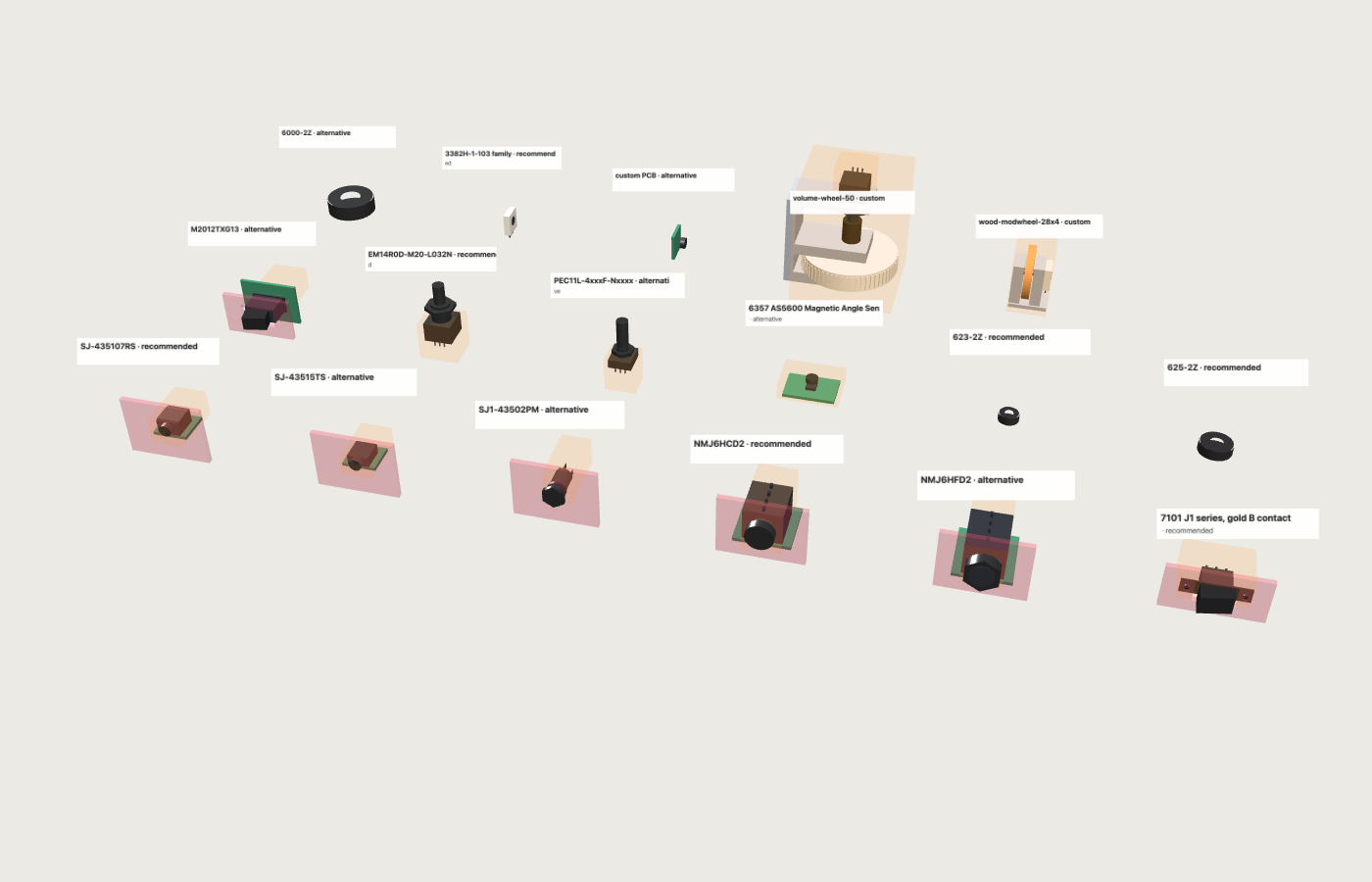
- Recommended parts: Same Sky SJ-435107RS (3.5 mm 4-pole, metal bushing, isolated N-O detect switch), Neutrik NMJ6HCD2 (6.35 mm, 3 normalling contacts, >10,000 cycles) and C&K 7101 J1 rocker with gold B contacts (logic level, rear bracket). Each has at least one sourced alternative: SJ-43515TS / SJ1-43502PM, NMJ6HFD2, and NKK M2012TXG13.
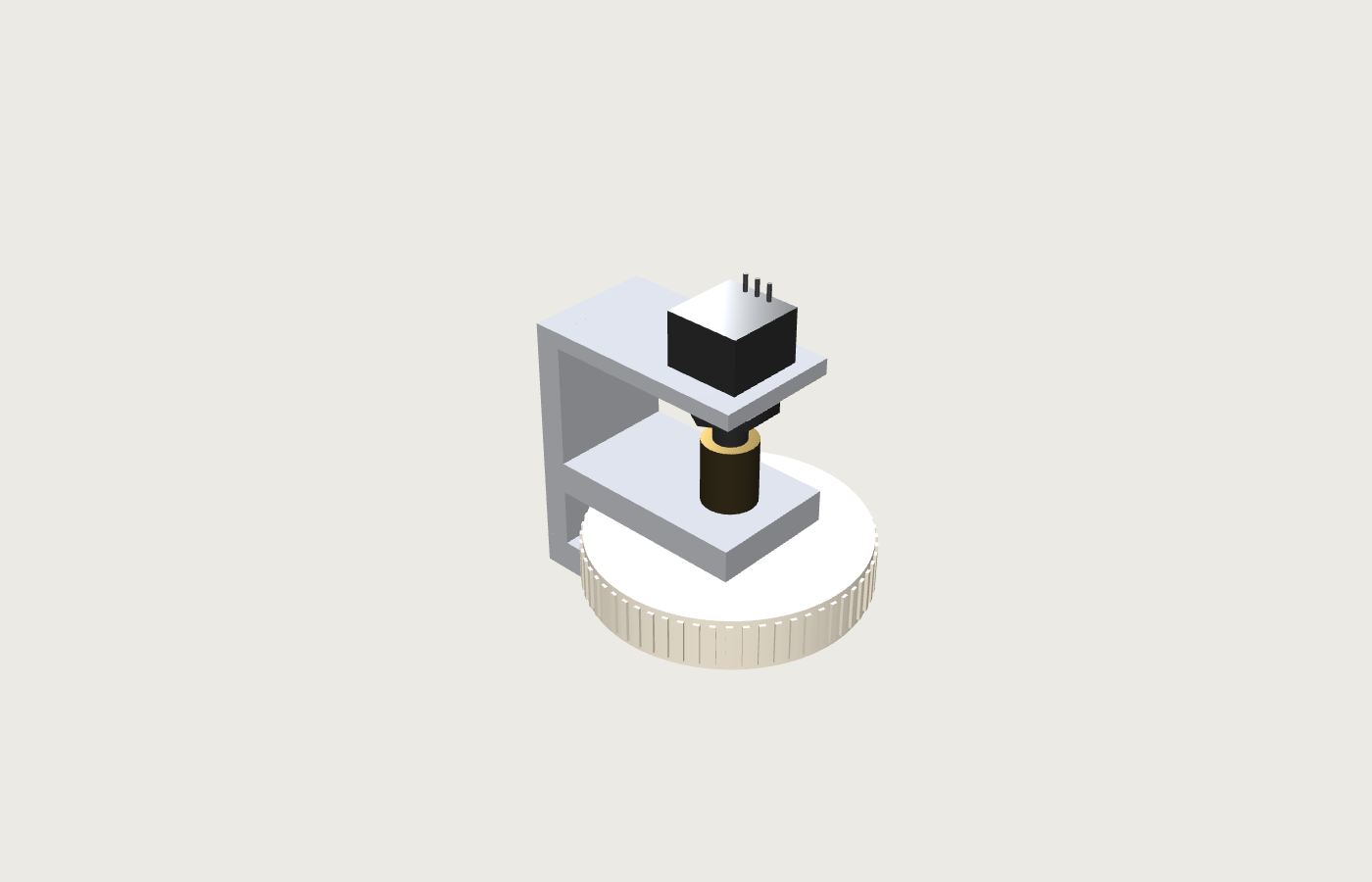
- Volume wheel: custom 50 x 10 mm cap on a 5 mm shaft in two SKF 625-2Z bearings. A Bourns EM14 optical encoder (1,000,000 cycles without detents) sits on a coupling; PEC11L and AS5600 are alternatives. The full stack is 59 mm tall with EM14, so the current 22 mm reservation is too small.
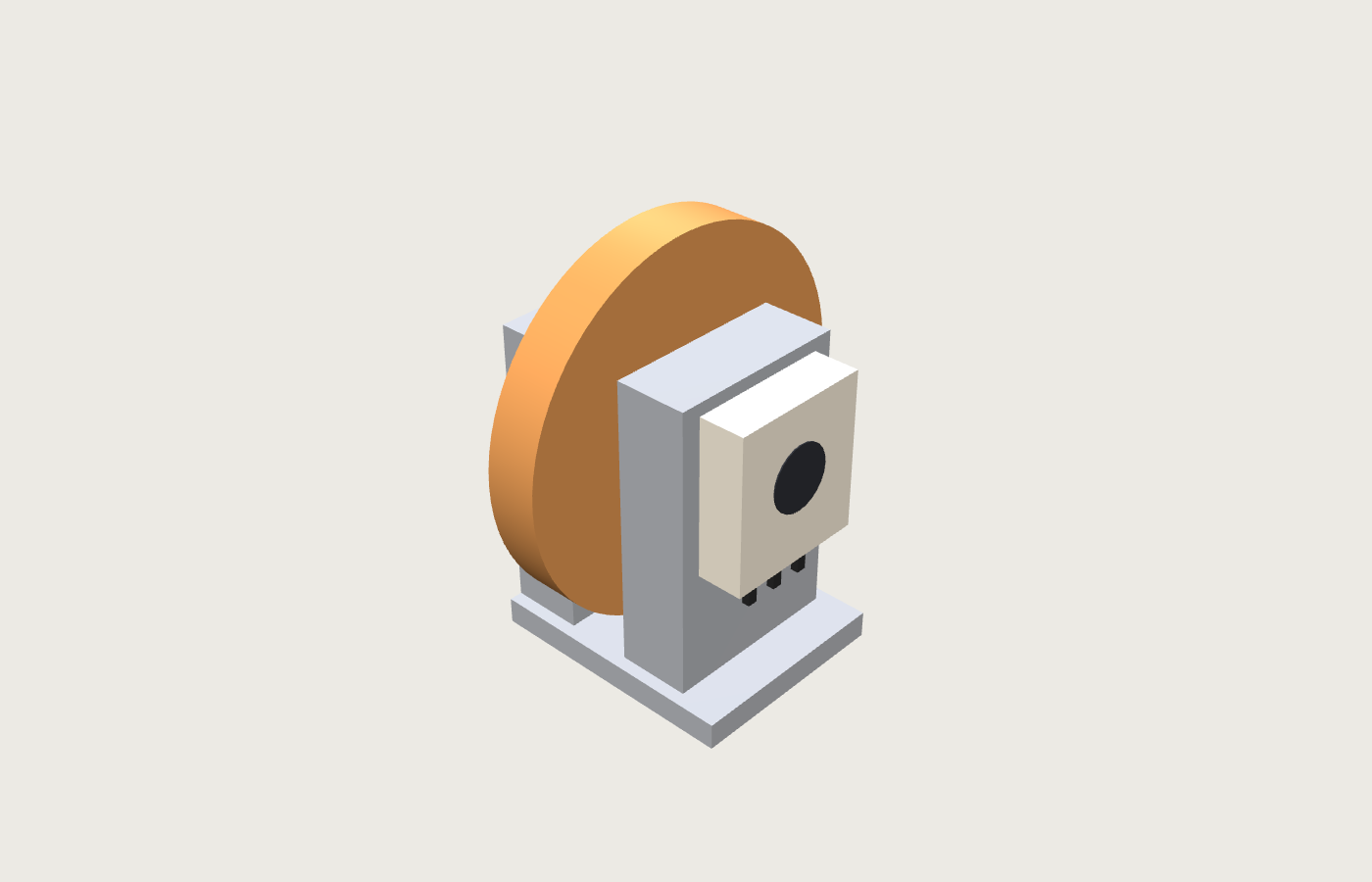
- Wood modulation wheels: a custom assembly with SKF 623-2Z bearings and a Bourns 3382H sensor (1,000,000 cycles, ~3.5 mm thick). The right-side band has no X margin (19.5 mm needed vs 19.4 mm available).
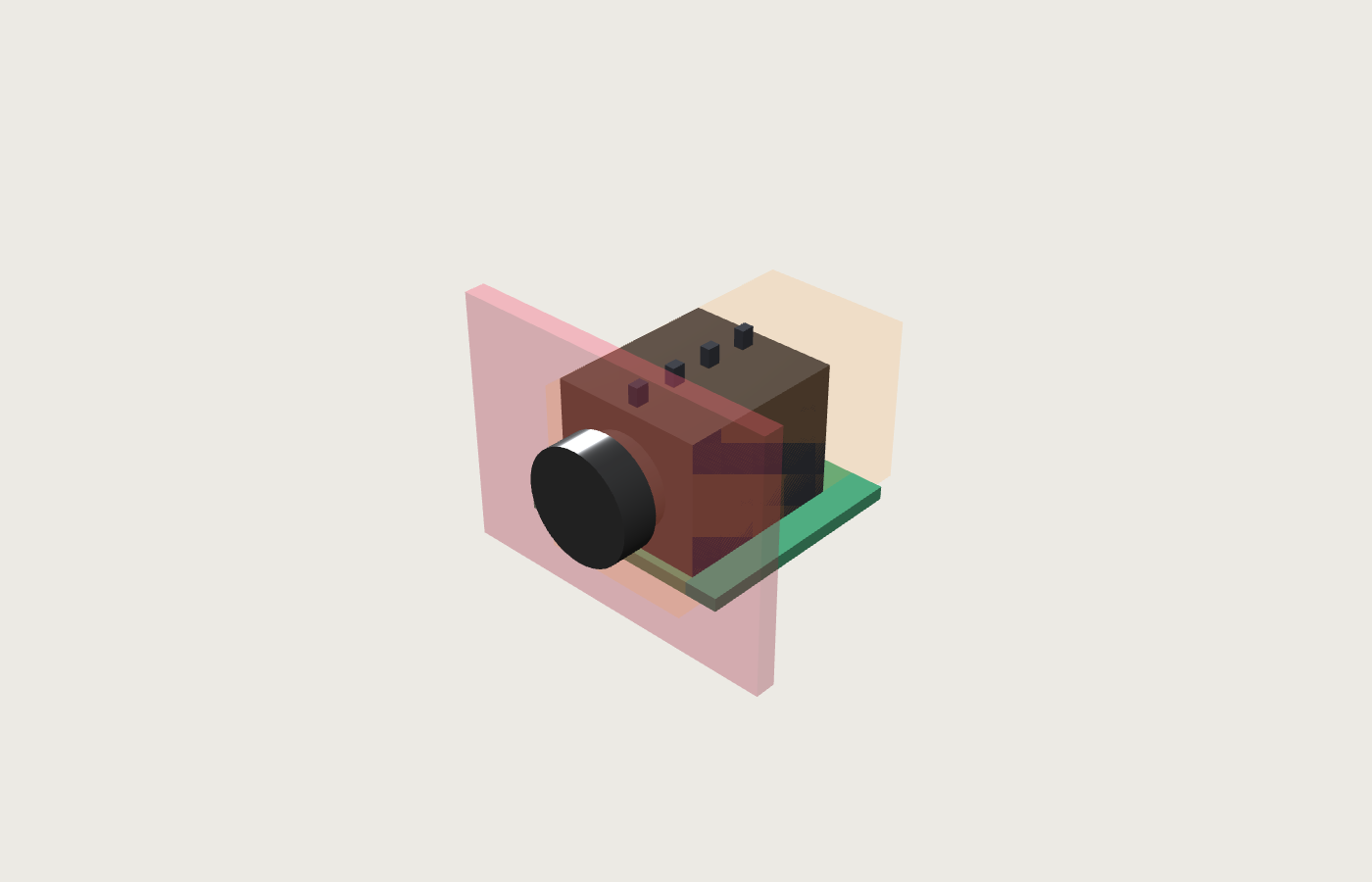
- Blocking fit issue: the NMJ6HCD2 body top (y 25.64) interferes with the provisional keybed support bottom (y 24.32) by 1.3 mm. Its ferrule also projects past the 2.5 mm pocket.
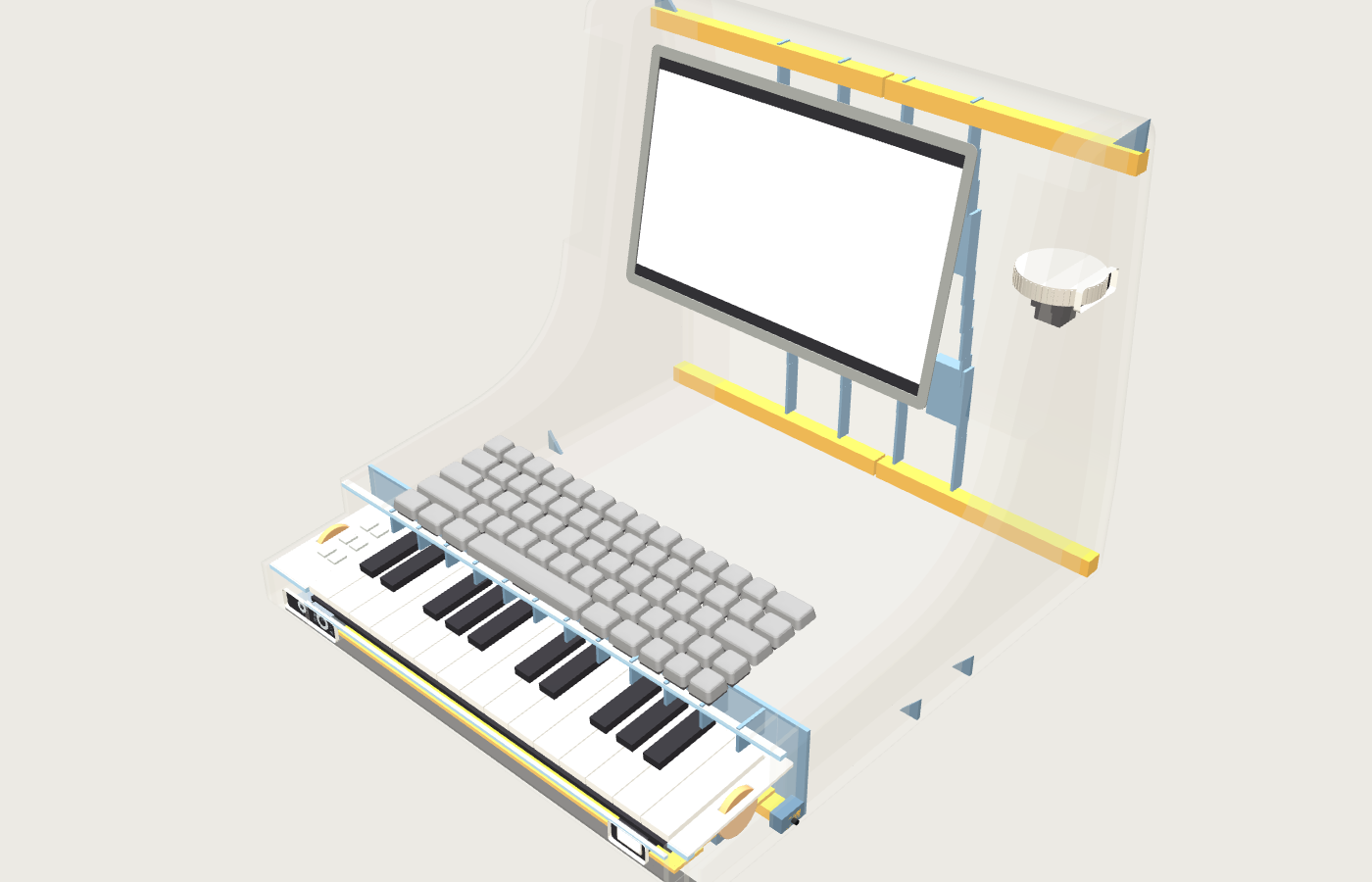
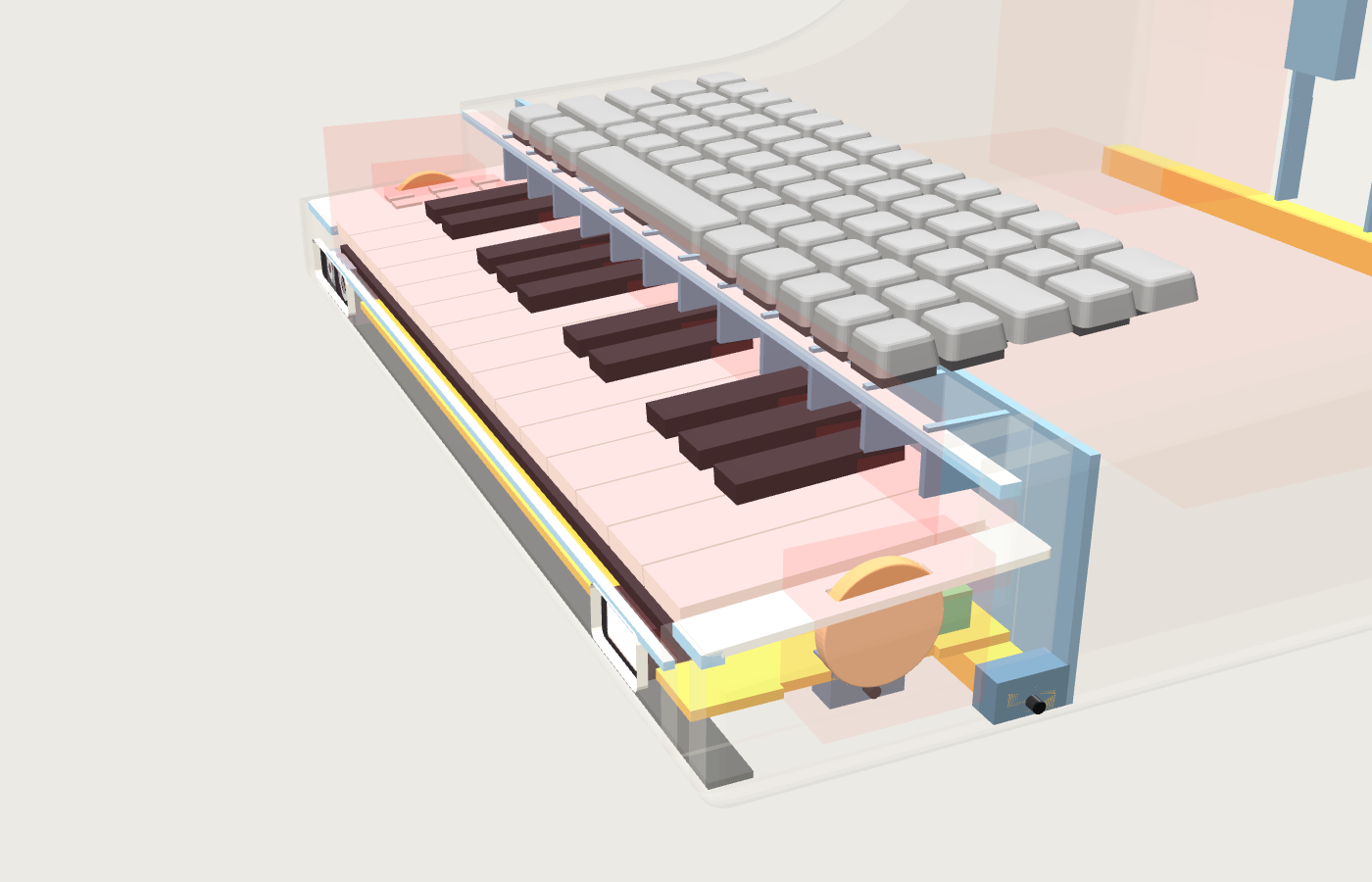
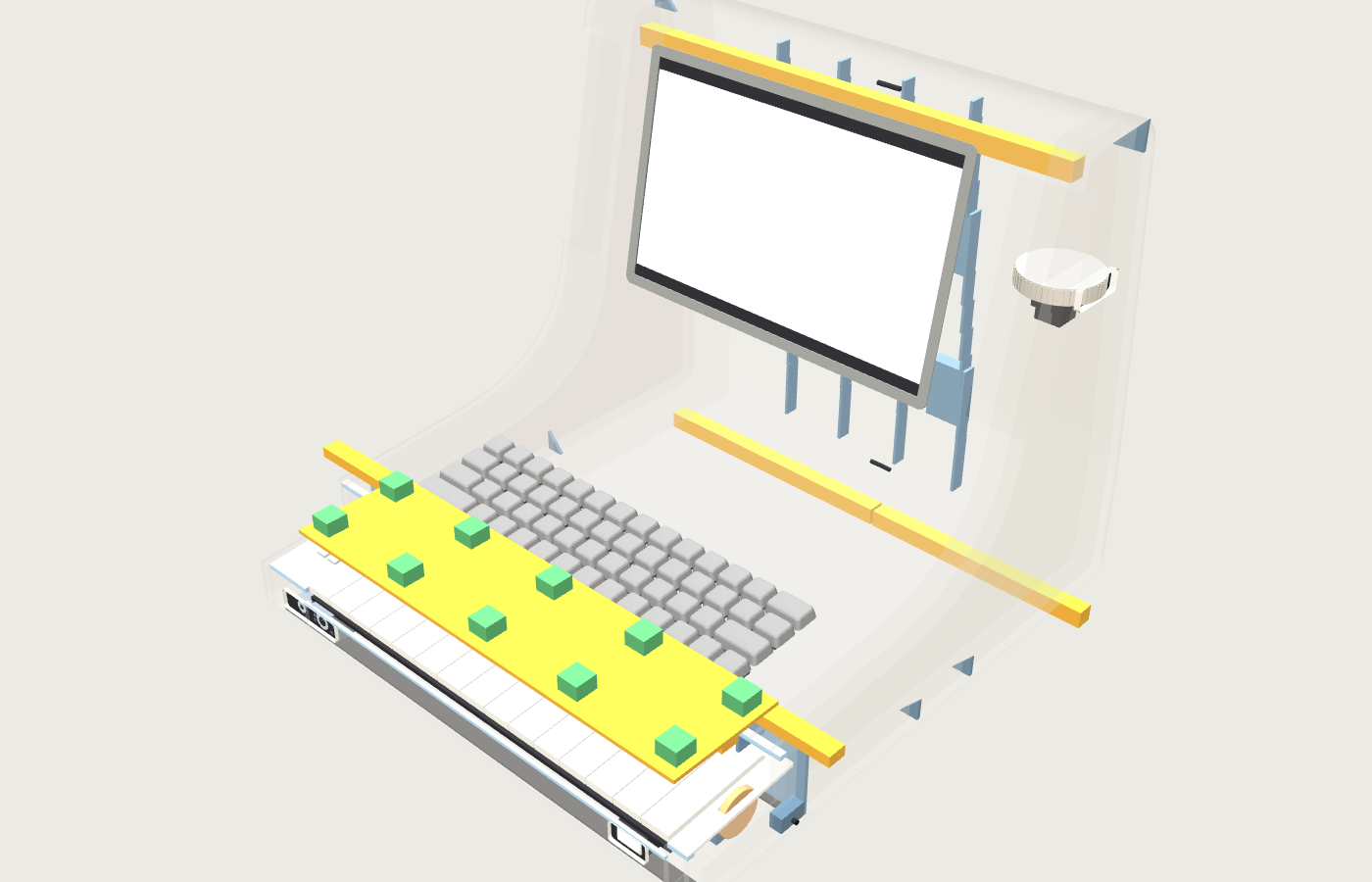
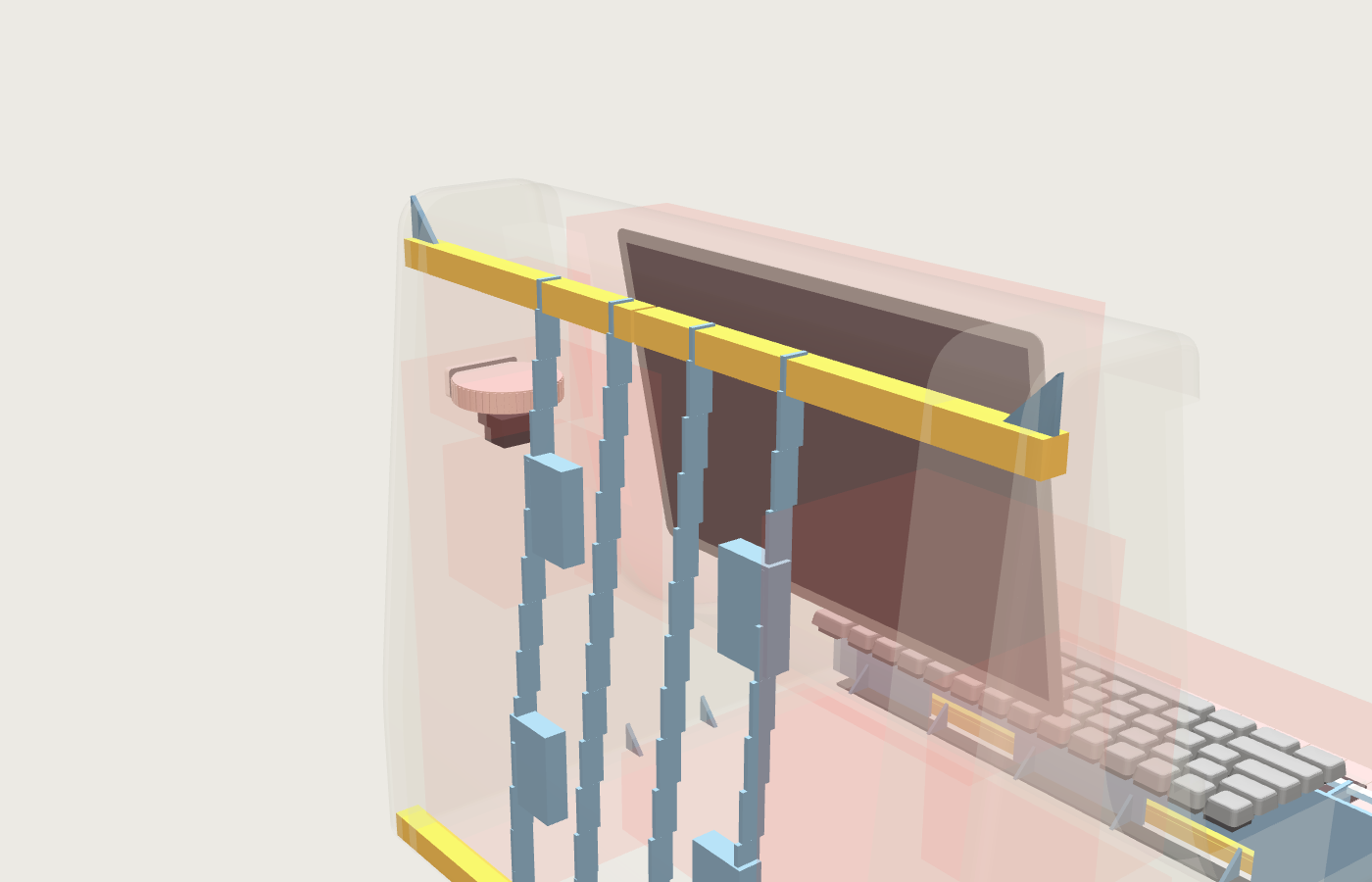
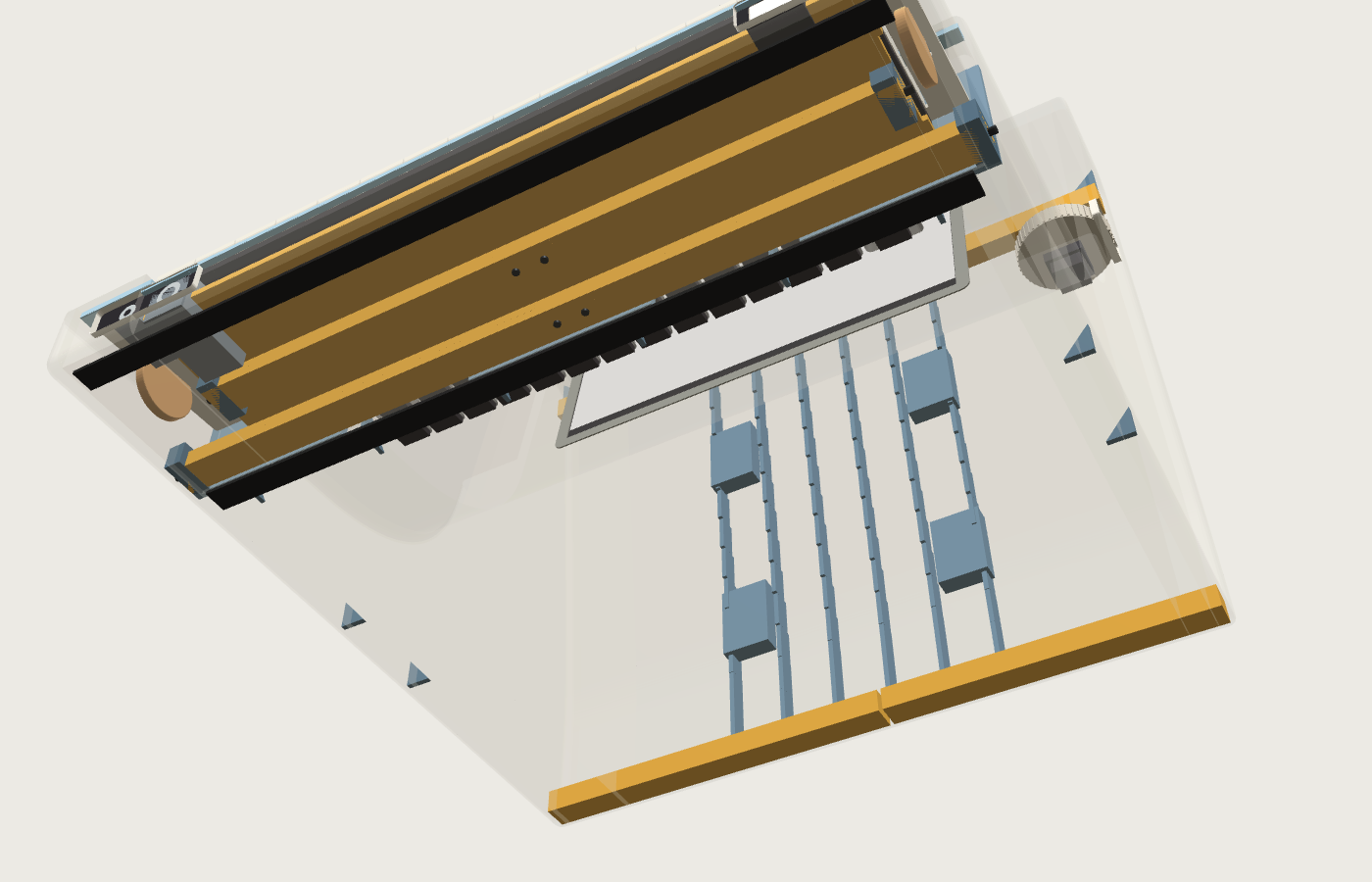
- Structure: a fixed front bulkhead, deck-lip ribs, bearing lands, two split under-keybed crossbars, a removable keybed tray with drillable pads, upper and lower rear crossbars, rear ribs with dock backers, and foot strips. The balanced preset adds about 365 g of PA12 (estimate). Clearance checks report zero clashes on five live parameter sets, and the camera is unchanged.
- Process: MJF/SLS PA12 is preferred for the shell and frame. SLA (Tough 2000 V2) has similar short-term stiffness, but its own creep graph shows 1.264% strain after 14 days at only 4 MPa. That is an apparent modulus of ~316 MPa (image estimate), which disqualifies it for sustained structural load. EOS PA 2200 Z elongation is 4% vs 18% in XY, so keep tensile fibres in the XY plane.
Using the deliverables
web/otterchip-hardware-catalog.js defines window.OTTERCHIP_HARDWARE_CATALOG, buildOtterchipHardwarePart(THREE, category, id, options) and otterchipHardwareMenu(category). The menu returns label/value pairs in the same style as the existing selects. Categories: headset35, headphone635, powerRocker, volumeEncoder, bearings, modWheelSensor, assemblies. Builder options: showKeepout, showPanel, panelThickness, and for assemblies encoder, bearing, sensor, diameter, thickness. Each returned group carries userData.hardwarePart with anchors, envelope, mount and the documented/derived/assumed/unknown tags. Parts use their own frame: x right, y up, z toward the mating face, origin at the body footprint centre on the underside.
web/otterchip-structure-study.js defines buildOtterchipStructureStudy(THREE, frame, options). Pass {...desktopGeometryInfo, music: musicBayInfo, hardware: desktopHardwareInfo} and add the result to desktopDynamic; it uses the same coordinates. Options: preset (lightweight/balanced/stiff), shell, ribT, ribPitch, ribDepth, bulkheadT, crossbarW/H/Z, splitX, trayT, drillPadSize/Rows/Cols, shimGap, rearRibs, seatLid, showKeepouts, explode (assembly path), material and origin. userData.structureStudy returns per-element volumes and masses (estimates), clashes against derived keep-outs, and the assembly paths. Neither file touches the camera, the URL or the DOM. otterchipStructurePresetComparison(THREE, frame) returns the preset table.
Component sourcing
3.5 mm CTIA headset socket
| Part | Documented | Derived / assumed | Mount, cut-out, panel | Mass / price | Sources (accessed 2026-11-05) | Model M fit |
|---|---|---|---|---|---|---|
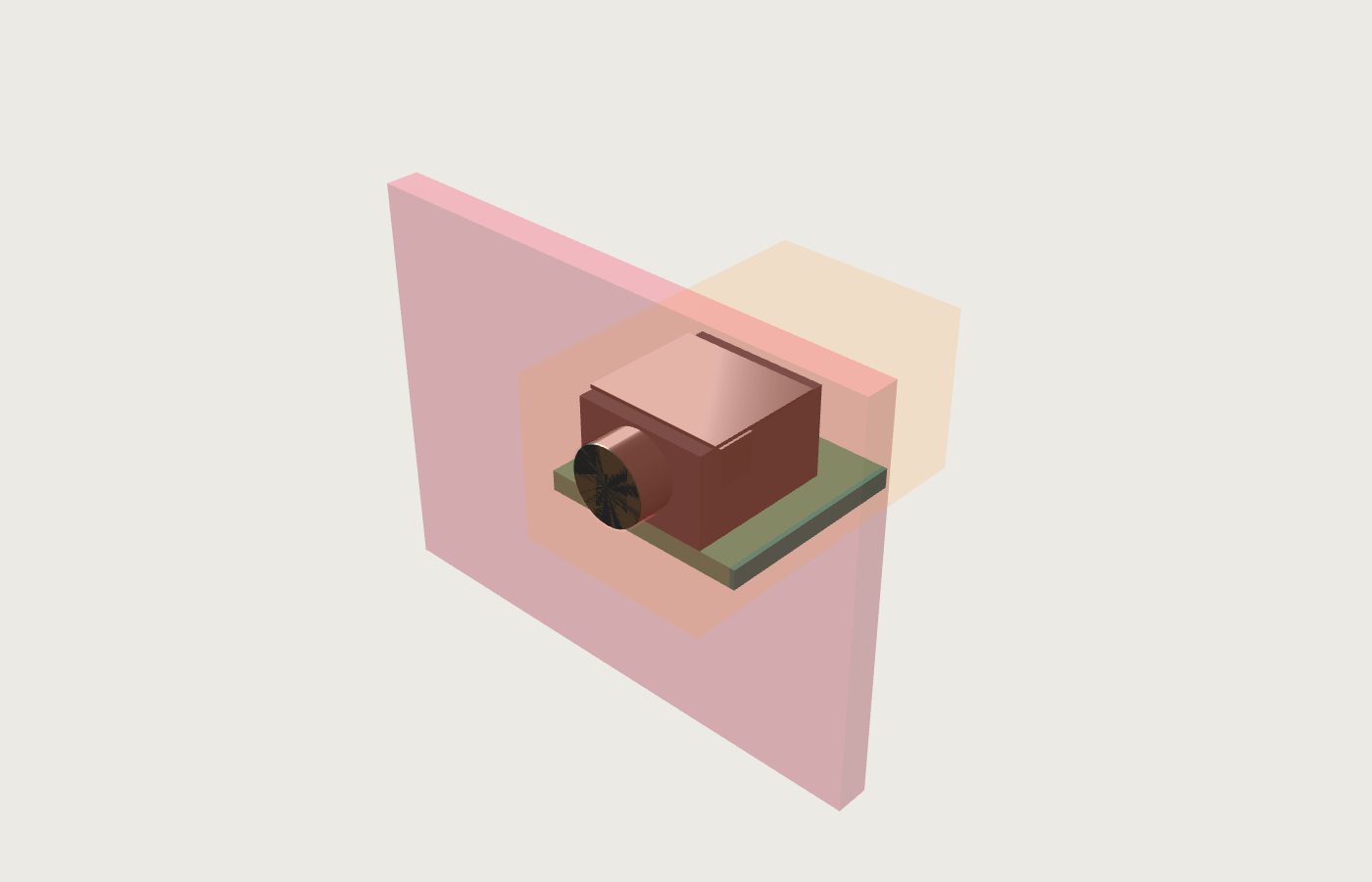
| Same Sky (formerly CUI Devices) SJ-435107RS recommended | conductors 4 pins sleeve, tip, ring1, ring2, isolated ring1 (5), isolated ring1 switch N-O (6) bodyLength_mm 12 bushingDia_mm 6 bushingLength_mm 3 bodyWidth_mm 10.8 bodyWidthWithTabs_mm 11.3 heightAbovePcb_mm 7.3 axisAbovePcb_mm 4 pinLength_mm 2.4 matingPlugLength_mm 14 rating 12 Vdc 1.0 A | maxFrontWallForFlushBushing_mm 3 assumed panelHoleDia_mm 6.3 cableServiceKeepout_mm 16 x 13.3 x 27 pcbThickness_mm 1.6 | PCB right-angle; bushing through shell hole; PCB must be screwed to shell bosses so plug side loads go into the shell, not the solder joints cut-out shape: circle; dia_mm: 6.3; basis: assumed 0.3 mm over documented 6.0 bushing panel max: 3; basis: derived from 3.0 mm bushing length for a flush face | not published | SJ-435107 series datasheet, date 09/13/2024 rev 1.04 Product page | Fits the current 12 x 10 x 24 mm reservation at y=17.5 (body top at y=20.8, below the provisional keybed support at 24.32). Wall at the 2.5 mm pocket must be <=3 mm. unknown: mass (not published); bushing retention strength; switch timing relative to ring contact |
| Same Sky SJ-43515TS alternative | conductors 4 pins sleeve, tip, ring1, ring2, tip switch overallLength_mm 14 bushingDia_mm 6 bushingLength_mm 3 bodyWidth_mm 10.2 axisOffsetX_mm -0.2 heightAbovePcb_mm 5 axisAbovePcb_mm 2.25 rating 16 Vdc 300 mA terminalStrength_g 500 life_cycles 5000 | assumed panelHoleDia_mm 6.3 cableServiceKeepout_mm 15 x 10 x 26 | PCB edge mount; plastic bushing; needs a printed collar/bracket because a child pulling a cable side-loads the PCB cut-out shape: circle; dia_mm: 6.3; basis: assumed panel max: 3; basis: derived from bushing length | not published | SJ-4351X series datasheet, date 09/12/2024 Product page (SJ-43514 family) | Smallest vertical envelope (5 mm) for packaging below the keybed; lower current rating is fine for headphones. unknown: mass; plastic bushing side-load strength |
| Same Sky SJ1-43502PM alternative | conductors 4 thread M7 x 0.50 overallLength_mm 16.2 threadLength_mm 4.5 flangeLength_mm 1.5 flangeDia_mm 9 bodyWidth_mm 8 nutAF_mm 10 nutThickness_mm 2 rating 12 Vdc 1 A life_cycles 5000 switch none | maxPanel_mm 2.5 basis thread 4.5 - nut 2.0 assumed panelHoleDia_mm 7.2 cableServiceKeepout_mm 14 x 14 x 30 | Panel nut; solder lugs and flying wires; plug loads go straight into the panel cut-out shape: circle; dia_mm: 7.2; basis: assumed M7 clearance panel max: 2.5; basis: derived | not published | SJ1-43502PM datasheet, date 09/12/2024 rev 1.03 Product page | The nut (10 A/F, 2 mm) sits in front of the panel: the 2.5 mm pocket hides it only if the wall is <=0.5 mm thick, so the pocket would need ~4.5 mm depth. unknown: mass |
Current site placeholder Same Sky SJ-43516 (SMT) was not re-verified: its series PDF was not retrieved in this pass.
All three Same Sky parts are rated 5,000 mating cycles; a child-use product should plan for a replaceable jack board.
6.35 mm stereo headphone socket
| Part | Documented | Derived / assumed | Mount, cut-out, panel | Mass / price | Sources (accessed 2026-11-05) | Model M fit |
|---|---|---|---|---|---|---|
| Neutrik NMJ6HCD2 recommended | bodyLength_mm 20.61 lengthWithNose_mm 23.53 noseLength_mm 3 bodyWidth_mm 18.2 bodyHeight_mm 15.67 axisFromTop_mm 8.14 pinLength_mm 4 pinDia_mm 1.4 panelCutoutDia_mm 11.4 ferruleAF_mm 11 ferruleLength_mm 5.79 washerThickness_mm 1.2 | axisAboveBodyBottom_mm 7.53 stepEnvelope_mm 20.02 x 17.29 x 27.86 ferruleProjectionFromStepOrigin_mm 4.33 maxPanelEstimate_mm 2.9 basis nose length 3.0 minus thread engagement; STEP origin assumed at panel face (unverified) assumed cableServiceKeepout_mm 18.2 x 19.7 x 35 | PCB pins; ferrule clamps panel against the jack face; PCB also screwed to bosses cut-out shape: circle; dia_mm: 11.4; basis: documented panel max: 2.9; basis: derived estimate, verify with STEP | not published | Drawing ST-NMJ6HCD2 (released 26.02.2021) STEP 3-D NMJ6HCD2 Product page with specifications Neutrik jacks circuits | Body top at y=25.64 when the axis is at 17.5: 1.3 mm interference with the provisional keybed support bottom (24.32) across x -129.6..-111.4. The ferrule projects ~4.3 mm (STEP), so a 2.5 mm pocket leaves it ~1.8 mm proud: deepen the pocket to >=5 mm or lower the axis to <=16 mm. unknown: published max panel thickness; mass |
| Neutrik NMJ6HFD2 alternative | bodyLength_mm 24 threadedNose_mm 8.85 bodyWidth_mm 18.2 bodyHeight_mm 15.84 axisFromTop_mm 8.29 pinLength_mm 4 panelCutoutDia_mm 11.2 nutAF_mm 15 nutThickness_mm 4.75 washer_mm 1.2 suppliedHardware fixing nut and washers (catalog) | axisAboveBodyBottom_mm 7.55 maxPanel_mm 2.9 basis 8.85 - 4.75 - 1.2 assumed cableServiceKeepout_mm 18.2 x 19.8 x 38 | Threaded nose + 15 A/F nut through panel; PCB pins cut-out shape: circle; dia_mm: 11.2; basis: documented panel max: 2.9; basis: derived | not published | Drawing ST-NMJ6HFD2 (released 26.02.2021) STEP nmj6hfd2 Product page Neutrik product guide, Plugs & Jacks 202110-V24 | The 15 A/F nut (17.3 mm across corners) does not fit the current 14 mm-tall pocket; needs a >=19 mm tall, >=5.5 mm deep pocket or an internal counterbore. unknown: mass; STEP envelope includes separated hardware (57.6 mm bbox), so not used |
Switchcraft 112BX and 35RAPC4BHN2 were investigated, but the Switchcraft drawings were not retrievable; distributor listings conflict on contacts, and 35RAPC4BHN2 is a 3-pole stereo jack, not CTIA. Neither is used.
Recessed low-voltage power rocker
| Part | Documented | Derived / assumed | Mount, cut-out, panel | Mass / price | Sources (accessed 2026-11-05) | Model M fit |
|---|---|---|---|---|---|---|
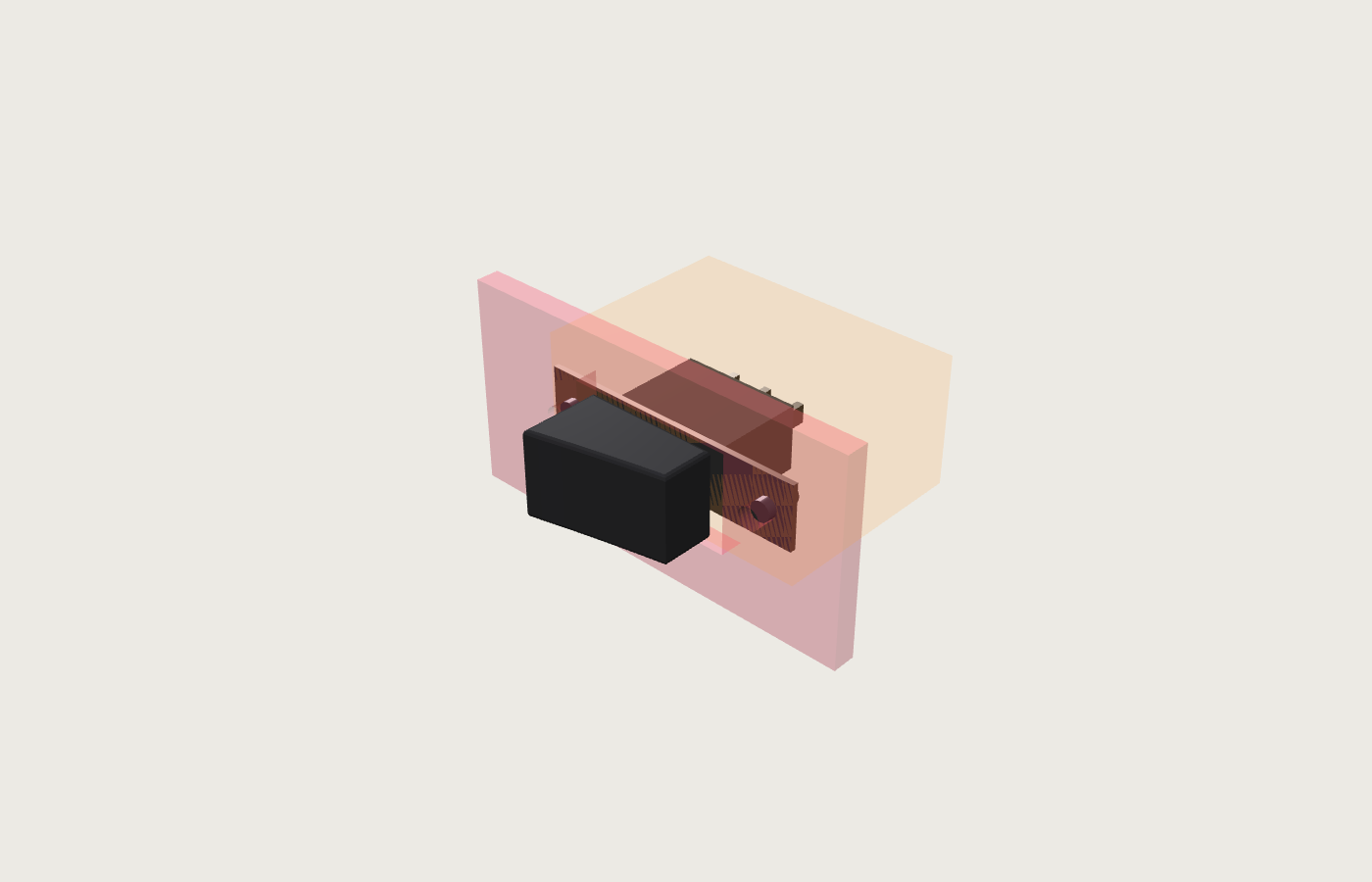
| C&K (Littelfuse) 7101 J1 series, gold B contacts (build code to confirm, e.g. 7101J1 + termination + B + E) recommended | function 7101 SP On-None-On actuatorLength_mm 13.49 actuatorWidth_mm 9.27 actuatorProjection_mm 7.87 bracketLength_mm 29.36 bracketWidth_mm 6.99 bracketThickness_mm 0.61 mountingHoleSpacing_mm 23.8 mountingHoleDia_mm 2.39 panelCutout_mm 17.96 x 10.62 caseWidth_mm 6.86 caseDepth_mm 9.4 | panelThicknessDesign_mm 3.18 assumed cableServiceKeepout_mm 30 x 14 x 22 | Rear panel mount on supplied bracket with two screws through the panel; documented holes, not invented cut-out shape: rect; w_mm: 17.96; h_mm: 10.62; holes: [object Object] x [object Object]; basis: documented panel max: 3.18; basis: supplied hardware for 1/8 in panels | not published | C&K 7000 Series catalog (mirror of manufacturer PDF, created 2016-12-14) Current Littelfuse 7000 datasheet (HTTP 403 to automated fetch; not read) Littelfuse 7000 series page | Front pocket is 26 x 14 mm; the two bracket screws at +/-11.9 mm need 29.4 mm of wall behind the pocket, so the pocket floor must be a plate of at least 30 x 11 mm. The rocker projects 7.87 mm: keep it below the 2.5 mm pocket face by recessing the bracket plate ~5.4 mm (assumed). unknown: mass; current revision differences: model-m.html cites a 16.87 x 9.27 actuator from the newer Littelfuse sheet, which could not be read here |
| NKK Switches M2012TXG13 (+ actuator/cap code to confirm) alternative | circuit SPDT On-On contacts G gold over brass/copper: 0.4 VA max @ 28 V AC/DC (applicable 0.1 mA-0.1 A @ 20 mV-28 V) bodyWidthSP_mm 8 bodyLength_mm 15.8 bracketLength_mm 11.8 terminalLength_mm 6.35 actuatorProjection_mm 8.8 throw_deg 25 panelCutout_mm AT4148/AT4149: 17.8 x 10.1; AT4150/AT4151: 12.7 x 12.4 mechanicalLife 50000 electricalLifeGold 50000 case DAP UL94V-0 | assumed cableServiceKeepout_mm 18 x 12 x 26 | PCB bracket mount; panel not clamped; PCB screwed to shell bosses positions the actuator in the cutout cut-out shape: rect; w_mm: 17.8; h_mm: 10.1; basis: documented for AT4148/4149 panel max: ; basis: set by PCB stand-off; not a panel clamp | not published | NKK Series M miniature rockers catalog (Farnell-hosted copy, 2011) NKK Switches | Fits the 26 x 14 pocket footprint; PCB stand-off sets the flush height. No exposed screws. unknown: mass; actuator code/colour suffix; current revision |
Rejected: Bulgin/Arcolectric H8500, E-Switch RR1 and similar snap-in rockers: mains-rated silver power contacts not specified for logic signals; 19.3 x 12.9 mm-class cutouts are larger than the 26 x 14 pocket allows with walls
Volume encoder / angle sensor
| Part | Documented | Derived / assumed | Mount, cut-out, panel | Mass / price | Sources (accessed 2026-11-05) | Model M fit |
|---|---|---|---|---|---|---|
| Bourns EM14R0D-M20-L032N (built from the datasheet key: R bushing M10x0.75, no detent, no A/R lug, M = 6 mm flatted shaft, 20 mm, axial pins, 32 PPR, no switch; EM14R1D-M20-L032N for 32 detents; confirm with distributor) recommended | body_mm 14.25 x 14.76 x 10.03 bushing R: M10 x 0.75, 9.5 mm long shaftDia_mm 6 shaftLength_mm 20 x 25 resolution_ppr 8 x 16 x 32 x 64 detent 32 detents option (8 or 32 PPR) life non-detent 1,000,000 cycles (2,000,000 rev) @30 rpm; detent 100,000 cycles radialPlay_in 0.005 axialStrength_lb 35 mountingTorque_Nm 2 seal splashproof shaft seal obsolescence cable/connector options 1-8 not recommended for new designs | assumed cableServiceKeepout_mm 20 x 20 x 18 | Bushing nut into a metal or 3 mm printed encoder plate; coupled to the wheel shaft by a flexible coupling cut-out shape: circle; dia_mm: 10.3; basis: assumed M10 clearance panel max: 6; basis: assumed (9.5 bushing - nut) | not published | EM14 datasheet Bourns EM14 | unknown: mass (not found in text); distributor stock not checked |
| Bourns PEC11L-4xxxF-Nxxxx (no switch, flatted 6 mm shaft) alternative | bodyWidth_mm 11.8 widthWithLugs_mm 13.2 heightWithTabs_mm 13.6 bodyDepth_mm 4.5 bushing M7 x 0.75 bushingLength_mm 5 x 7 shaftDia_mm 6 shaftLength_mm 15 x 20 x 25 detents 0/20/30/18 life_cycles 100000 sideLoadStatic_kgf 2.04 pushPull_N 100 | assumed cableServiceKeepout_mm 16 x 18 x 14 | Bushing nut; PCB pins rear facing cut-out shape: circle; dia_mm: 7.3; basis: assumed panel max: 3; basis: assumed | 5 g | PEC11L datasheet REV 04/26 Bourns PEC11L | |
| Adafruit (ams AS5600 IC) 6357 AS5600 Magnetic Angle Sensor - STEMMA QT alternative | sensingRange senses a rotating N/S field up to 3 mm from the chip body (product page) price_usd 5.95 stockText In stock (product page, 2026-11-05) | assumed boardEnvelope_mm 25.4 x 1.6 x 17.8 magnet_mm dia: 6; t: 2.5; type: diametric airgap_mm 1.5 | Board on two bosses below the shaft end; no shaft load | not published $5.95 (2026-11-05 adafruit.com) | Adafruit product 6357 Adafruit learning guide ams OSRAM page now shows a notice about selling non-optical sensors to Infineon; check the IC supply path | unknown: board dimensions not on product page; mass; long-term IC sourcing |
Bearings
| Part | Documented | Derived / assumed | Mount, cut-out, panel | Mass / price | Sources (accessed 2026-11-05) | Model M fit |
|---|---|---|---|---|---|---|
| SKF 623-2Z recommended | d 3 D 10 B 4 C_kN 0.54 C0_kN 0.18 limitingSpeed_rpm 60000 | not published | SKF 623-2Z | unknown: mass not shown in captured page | ||
| SKF 625-2Z recommended | d 5 D 16 B 5 C_kN 1.14 C0_kN 0.38 limitingSpeed_rpm 48000 class SKF Explorer | not published | SKF 625-2Z | unknown: mass | ||
| SKF 6000-2Z alternative | d 10 D 26 B 8 C_kN 4.75 C0_kN 1.96 limitingSpeed_rpm 34000 | not published | SKF 6000-2Z | unknown: mass |
Modulation-wheel sensor
| Part | Documented | Derived / assumed | Mount, cut-out, panel | Mass / price | Sources (accessed 2026-11-05) | Model M fit |
|---|---|---|---|---|---|---|
| Bourns 3382H-1-103 family (H through-hole; -1 = 4 mm shaft, -2 = 3.5 mm shaft; code to confirm) recommended | body_mm 11 x 12.04 axialToMountingSurface_mm 2.8 x 3.5 rotationalLife_cycles 1000000 adjustmentAngle_deg 330 mechanicalAngle continuous torque_gfcm_max 30 weight_g 0.321 linearity +/-2 % resistance 2.5k-100k ip IP40 | assumed cableServiceKeepout_mm 14 x 16 x 8 | PCB through-hole; sensor PCB is the outboard cradle cheek; axle D-flat drives the rotor | 0.321 g | 3382 12 mm rotary position sensor datasheet | unknown: D-shaft engagement depth |
| ams AS5600 class (e.g. Adafruit 6357 for bench work) custom PCB alternative | sensingRange up to 3 mm from chip body (Adafruit page) | assumed stackAlongAxle_mm 6.1 basis magnet 2.5 + airgap 1.5 + IC 0.5 + PCB 1.6 | not published | Adafruit product 6357 | unknown: custom PCB size |
Custom assemblies (not off-the-shelf)
Detection, muting and graceful shutdown (compatible, not a finished circuit)
Plug detect and speaker mute
- Same Sky SJ-435107RS: isolated normally-open switch (pins 5/6) shown on the drawing; read as a GPIO with pull-up and 20-50 ms debounce (ASSUMED values).
- Same Sky SJ-43515TS: tip switch (pin 5) shown on the drawing; detect sense depends on switch polarity, bench-verify.
- Neutrik NMJ6HCD2 / NMJ6HFD2: three normalling contacts (TN, RN, SN, rated 0.5 A @ 50 V). A normalling contact that is not in the audio path (e.g. SN) can be used as a plug sensor; confirm break sequence with the Neutrik jacks-circuits sheet and a bench plug.
- Same Sky SJ1-43502PM has no switch: detection would need a codec impedance/mic-bias sense (unverified) or a different jack.
- Firmware: on detect, stop or zero the speaker I2S stream and route playback to a ground-referenced headphone codec/amplifier; ramp to avoid clicks.
- Hardware: the Adafruit #6513 product page does not list a shutdown/SD pin on its header (accessed 2026-11-05); a load switch on the amplifier VIN or a board modification would be needed for a hardware mute. Verify before relying on it.
- Never connect MAX98357A bridge-tied speaker outputs to a common-ground headphone sleeve.
Raspberry Pi graceful shutdown with a maintained rocker
- Rocker (gold logic-level contacts) is an input to an external power controller, never in series with the 5 V rail.
- Rocker OFF -> controller asserts a Pi GPIO configured with dtoverlay=gpio-shutdown (generates KEY_POWER; systemd-logind shuts down; default debounce 100 ms).
- Pi signals completion through dtoverlay=gpio-poweroff (default GPIO 26). README: it is safe to remove power any time after the initial activation; an external mechanism to remove power is REQUIRED or the kernel reports a BUG. gpio-poweroff also disables waking by driving GPIO3 low.
- Controller then opens the 5 V load path; a maximum shutdown timeout and a hard-off fallback are requirements for the future circuit, not specified here.
- Rocker ON -> controller re-enables 5 V (cold boot).
Source: Raspberry Pi firmware boot/overlays/README (gpio-shutdown, gpio-poweroff). On an ESP32-P4 host the same rocker is a GPIO: firmware flushes state, then releases its own power latch.
Support-frame study
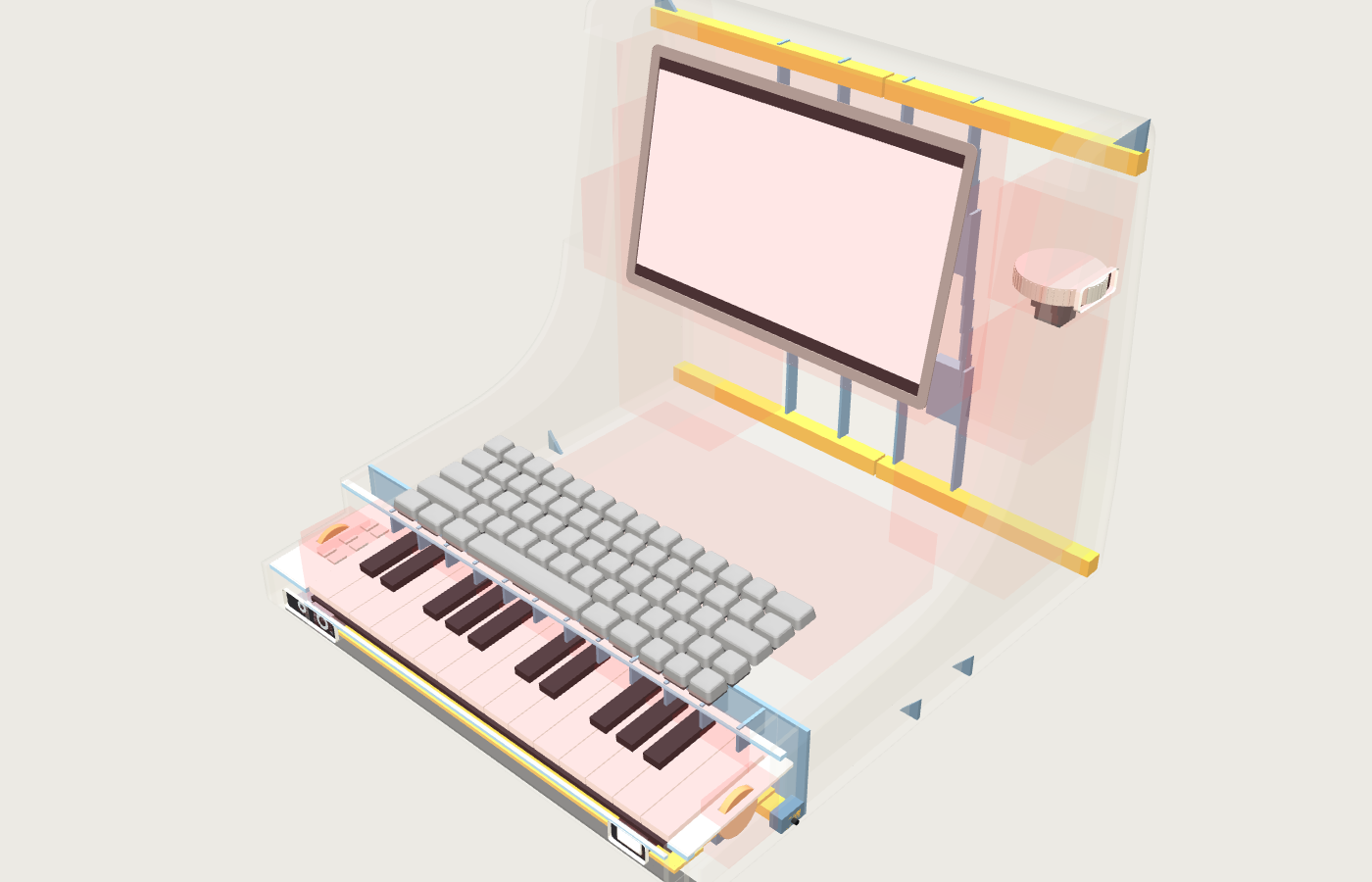
The study does not fill the body with honeycomb. Stiffness comes from load paths: closed sections (bulkhead + floor + front wall), short spans, ribs only where they shorten a span and only in plane with the load, and a full-width foot strip so vertical load bears straight onto the table. Every structural box is checked against keep-outs for the key tails, the open key/finger zone, the wheels, jacks, rocker, volume-wheel stack, display module, speaker chambers and the electronics zone. The drill pads stop 1 mm below the keybed support, so nothing touches key travel, the screen or the keybed PCB.
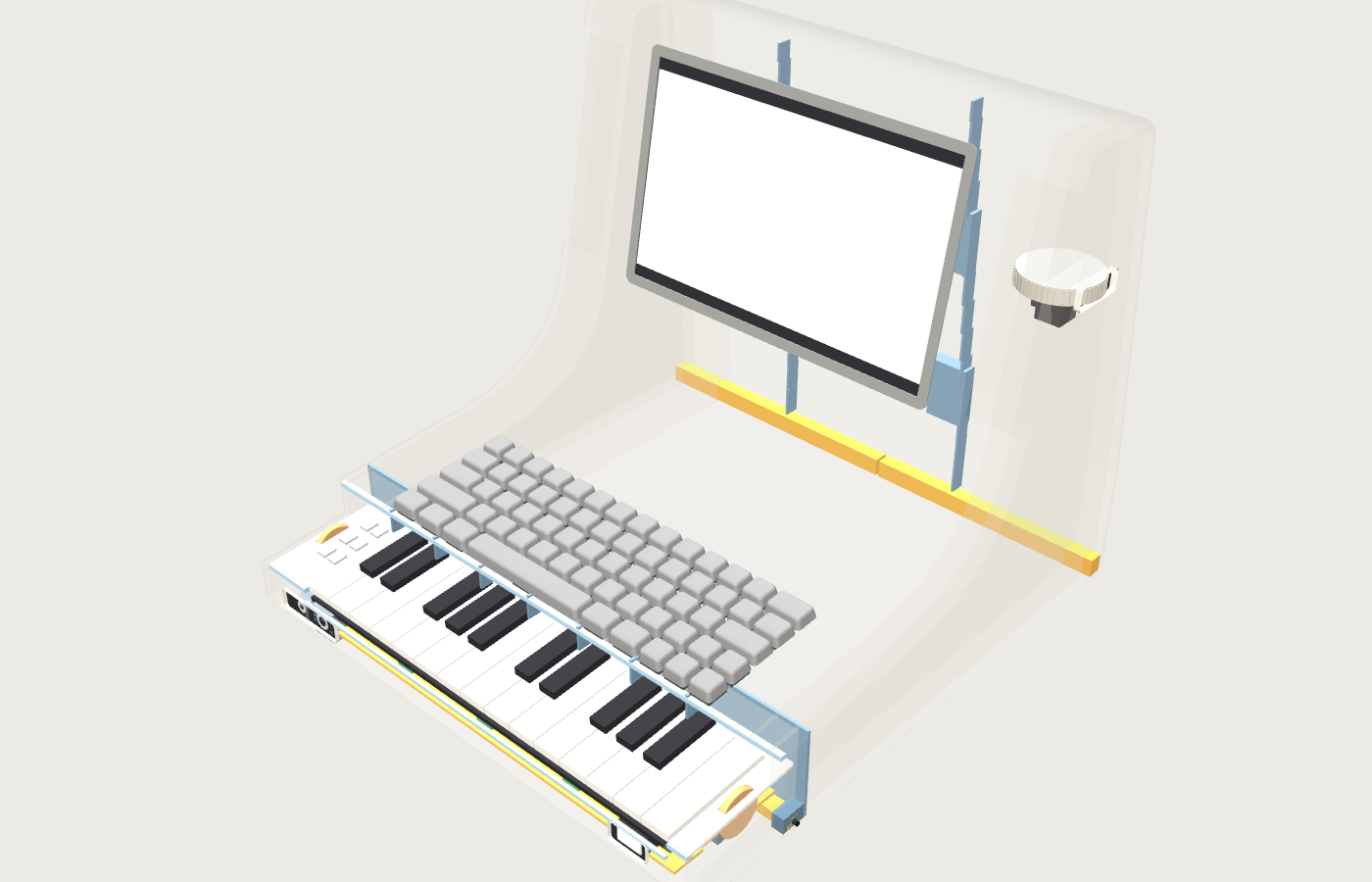
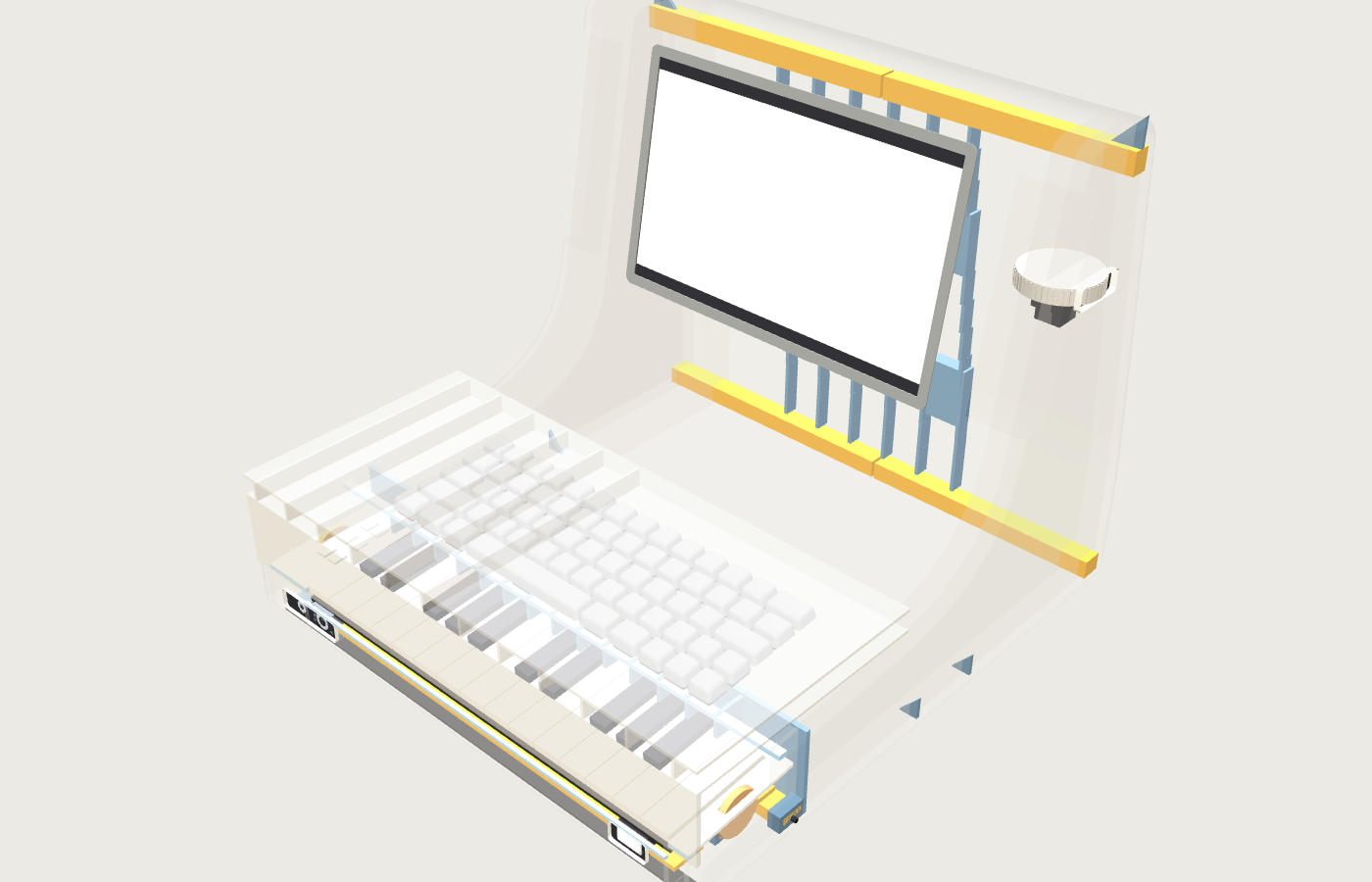
Presets (estimates; MJF PA12 density 1.01)
| Preset | Shell mm | Ribs t @ pitch | Crossbar W x H | Frame cm³ | Frame g | Shell g (area x t) | Total g | Lid g (optional) | Clashes |
|---|---|---|---|---|---|---|---|---|---|
| lightweight | 2 | 1.6 @ 40 | 10 x 7 | 243.3 | 246 | 1857 | 2103 | 305 | 0 |
| balanced | 2.5 | 2 @ 25 | 12 x 7 | 361.3 | 365 | 2321 | 2686 | 305 | 0 |
| stiff | 3 | 2.4 @ 20 | 14 x 8 | 441.4 | 446 | 2786 | 3232 | 305 | 0 |
Shell mass = rendered surface area 919,399 mm² x wall thickness x density (thin-shell estimate). Frame = sum of element boxes. Neither includes inserts, fasteners, chamber walls or the cushion.
Balanced elements
| Element | Type | Pieces | cm³ | g | Purpose / path |
|---|---|---|---|---|---|
| Front bulkhead (fixed, rear of music bay) | fixed | 5 | 45.81 | 46.3 | Carries deck lip and carrier rear-ledge load straight to the floor; cable windows at floor level. |
| Deck-lip ribs (fixed) | fixed | 12 | 7.73 | 7.8 | Depth 16.0 mm, bottom >= 3 mm above resting key tops. |
| Carrier bearing lands and ledges (fixed) | fixed | 6 | 7.41 | 7.5 | Flat, thickened lands: rear lip step, front-wall top, wing tops, rail tops. Keep >=3 mm wall below each land. |
| Under-keybed crossbar 1 (split, detachable) | removable | 4 | 29.4 | 29.7 | Halves drop in through the open bay (carrier and keybed out), slide outward into blind side-wall pockets, then lap-bolt at x=11. Top at y=11.5, below the tray/keybed stack. |
| Crossbar 1 side bosses (fixed) | fixed | 2 | 2.88 | 2.9 | Pockets in the side walls / wing walls receive the bar ends; one horizontal fastener each. |
| Under-keybed crossbar 2 (split, detachable) | removable | 4 | 24.38 | 24.6 | Halves drop vertically into open-top saddles on the wing walls (no outward slide: wood-wheel cradles), then lap-bolt at x=11. Top at y=11.5, below the tray/keybed stack. |
| Crossbar 2 side bosses (fixed) | fixed | 2 | 2.88 | 2.9 | Pockets in the side walls / wing walls receive the bar ends; one horizontal fastener each. |
| Keybed backing tray (removable) | removable | 9 | 53.18 | 53.7 | Lowered through the bay, then slid rearward with the keybed by the underlap. Notched around jack/rocker keep-outs. |
| Drillable sacrificial pads (solid, on tray) | removable | 8 | 14.62 | 14.8 | Solid 14 mm pads, top 1 mm below the keybed support for shims. NOT keybed screw locations: drill/insert only after measuring the bare SE25. |
| Rear lower crossbar (split, detachable) | removable | 2 | 50.11 | 50.6 | Below the speaker chambers (y<20); ties the rear corners and backs the rear foot line. |
| Rear upper crossbar (split, detachable) | removable | 2 | 45.94 | 46.4 | Above chambers and the volume-wheel stack, behind the display keep-out; resists racking of the tall upper body. Install from the bottom service opening with the display out. |
| Upper crossbar corner gussets (fixed) | fixed | 2 | 0.81 | 0.8 | Side wall to crossbar. |
| Rear-wall vertical ribs (fixed) | fixed | 56 | 21.72 | 21.9 | Follow the forward-leaning rear wall; shallower where the sealed chambers sit close to the wall. |
| Rear dock backer pads (fixed) | fixed | 4 | 41.6 | 42 | Solid backing where the root rear-cover dock hooks land; loads go into the vertical ribs, not the thin wall. |
| Floor gussets (fixed) | fixed | 10 | 2.02 | 2 | Bulkhead-to-floor (rear face only, away from the keybed) and side-wall-to-floor between chambers and wall. |
| Full-width foot strips (TPU/rubber) | fixed | 2 | 10.86 | 11 | Under the front wall and bulkhead lines. First-order: corner-feet-only floor bending reaches ~30 MPa for LC2; strips remove that path. |
Original concept-frame validation (355 mm study)
The main viewer now adds a larger donor-fit layout and updated typing supports. Its Build & fit panel computes current conflicts. These tables and the standalone frame viewer retain the original comparison baseline.
| Parameter case | Clashes per preset | Camera after study rebuild | Camera after parameter edit |
|---|---|---|---|
| current defaults | lightweight: 0, balanced: 0, stiff: 0 | unchanged | unchanged |
| wider 400 mm | lightweight: 0, balanced: 0, stiff: 0 | unchanged | unchanged |
| jack spacing 26, control height 15 | lightweight: 0, balanced: 0, stiff: 0 | unchanged | unchanged |
| wheel up 30 mm | lightweight: 0, balanced: 0, stiff: 0 | unchanged | unchanged |
| underlap 30, drop 22 | lightweight: 0, balanced: 0, stiff: 0 | unchanged | unchanged |
Keep-outs are derived from the live musicBayInfo, desktopHardwareInfo and screen geometry. Audio chambers, the button cluster and the electronics zone come from the snapshot (the electronics zone is ASSUMED). A raised volume wheel (+30 mm) originally clashed with the upper crossbar; the bar now positions itself above the wheel stack.
Process-aware material behaviour
| Material | E XY / Z (MPa) | Strength XY / Z | Elongation XY / Z % | Density g/cm³ | E short-term low | E long-term low | Source |
|---|---|---|---|---|---|---|---|
| HP 3D High Reusability PA 12 (MJF) | 1700 / 1800 | 48 / 48 | 20 / 15 | 1.01 | 1360 | 544 modulus x 0.8 x ASSUMED creep factor 0.4 | HP datasheet copy hosted by reseller Proto3000 (ASTM D638; doc created 2017-11, modified 2018-12) |
| EOS PA 2200 (SLS PA12) | 1650 / 1650 | 48 / 42 | 18 / 4 | 0.93 | 1320 | 528 modulus x 0.8 x ASSUMED creep factor 0.4 | EOS material data sheet web page mds-pa-2200 (ISO 527-1/-2) |
| Formlabs Tough 2000 Resin V2 (SLA, post-cured) | 1800 / 1800 | 40.4 / 40.4 | 79 / n/a | not retrieved | 1440 | 253 flexural modulus x 0.8 x creep 0.19 (14 d @ 4 MPa image estimate) | Formlabs TDS 25011072 Rev 01 2025-10-06 (ASTM D638-14 / D790-17; ISO 6602 creep graph) |
Image estimate: OpenCV digitization of the Formlabs Tough 2000 V2 TDS flexural creep graph (ISO 6602, 4.0 MPa, 22 °C). V2 reaches 1.264% at 14 days, against an elastic strain of ~0.235% at the 1701 MPa flexural modulus. The axis calibration uses the detected gridlines; the first marker is a merged cluster near t≈0.
- MJF / SLS PA12 are near-isotropic in stiffness (HP: 1700 XY / 1800 Z; EOS: 1650 in X/Y/Z). They are not isotropic in ductility: EOS strain at break is 18% XY vs 4% Z, and HP 20% vs 15%. Orient so rib tips and the tension faces of beams lie in the XY plane, and avoid Z-direction tension across layer boundaries at bosses and snap hooks.
- HP guidance (Learning Center): short walls ≥0.3 mm XY / 0.5 mm Z, a 2 mm minimum recommended wall for hollow parts, avoid ribs on large flat areas, and warpage risk above a 10:1 aspect ratio; HP calls these starting points, not specifications. So the frame uses short, shallow ribs tied into walls and bulkheads, never a lattice across the 355 mm floor. A separate tray and crossbars avoid printing one long flat plate.
- Moisture: PA12 stiffness drops when conditioned. The EOS page lists only dry values. Test conditioned coupons.
- SLA (Tough 2000 V2): E 1800, UTS 40.4 MPa, HDT 57 °C @1.8 MPa / 70 °C @0.45 MPa. It is fine for appearance parts, cosmetic covers and jigs, but not for any member under sustained load (seat, display hinge, dock hooks). A car interior or a sunny window approaches its HDT.
- Creep for PA12 was not retrieved from HP or EOS. The calculations use an ASSUMED long-term factor of 0.4 (range 0.4-0.6) on top of a 0.8 process knock-down. This must be replaced by a coupon test.
Provisional child-load screening
Assumptions. 50 kg design child: CDC 2000 weight-for-age 95th percentile at 126.5 months is 49.3 kg (boys) / 51.5 kg (girls). Older children and adults exceed this; adults are NOT covered. ASSUMPTION: 2.0 static-equivalent for dropping into a seat or kneeling; a real drop can exceed this. Proof testing must include a drop/impact case. ASSUMED screening targets (not standards): impact peak stress <= 0.25 x datasheet strength in the weakest build direction; sustained stress <= 4 MPa for PA12 and <= 2 MPa for Tough 2000 V2 (whose 4 MPa creep test shows 1.26 % strain after 14 d); deflection at keys/screen: zero contact with 3 mm margin. Seat contact is ASSUMED to spread over a 200 mm width. Beams are one-way, simply supported, first-order and linear. Red rows exceed the screening stress target.
| Case | Mass | Factor | P (N) | Modulus used |
|---|---|---|---|---|
| LC1_static_seated | 50 kg | 1 | 491 | long_low |
| LC2_sudden_sit | 50 kg | 2 | 981 | short_low |
| LC3_knee_or_foot | 50 kg | 2 | 981 | short_low |
E1 Current 3.5 mm carrier, plain
Removable carrier top as 3.5 mm plain plate, one-way span 59.5 mm fore/aft, P over 200 mm width. Seat on carrier alone is not realistic (child also loads typing keys); shown as a lower bound.
| Material | Case | E used (MPa) | Deflection (mm) | Peak stress (MPa) | Stress / (0.25 x strength) |
|---|---|---|---|---|---|
| MJF_PA12 | LC1_static_seated | 544 | 3.46 | 8.9 | 0.74 |
| MJF_PA12 | LC2_sudden_sit | 1360 | 2.77 | 17.9 | 1.49 |
| SLS_PA12 | LC1_static_seated | 528 | 3.57 | 8.9 | 0.85 |
| SLS_PA12 | LC2_sudden_sit | 1320 | 2.85 | 17.9 | 1.7 |
| SLA_Tough2000V2 | LC1_static_seated | 253 | 7.44 | 8.9 | 0.88 |
| SLA_Tough2000V2 | LC2_sudden_sit | 1440 | 2.62 | 17.9 | 1.77 |
E2 / E2b Ribbed carrier
Carrier with fore/aft ribs 2.0 x 8.0 mm @ 25 mm under a 3.5 mm skin (rib depth limited by key-top clearance 17.3 mm).
| Material | Case | E used (MPa) | Deflection (mm) | Peak stress (MPa) | Stress / (0.25 x strength) |
|---|---|---|---|---|---|
| MJF_PA12 | LC1_static_seated | 544 | 0.5 | 6.5 | 0.54 |
| MJF_PA12 | LC2_sudden_sit | 1360 | 0.4 | 13 | 1.08 |
| SLS_PA12 | LC1_static_seated | 528 | 0.51 | 6.5 | 0.62 |
| SLS_PA12 | LC2_sudden_sit | 1320 | 0.41 | 13 | 1.24 |
| SLA_Tough2000V2 | LC1_static_seated | 253 | 1.07 | 6.5 | 0.64 |
| SLA_Tough2000V2 | LC2_sudden_sit | 1440 | 0.38 | 13 | 1.29 |
Carrier with fore/aft ribs 2.0 x 10.0 mm @ 20 mm (still >= 6 mm above resting key tops).
| Material | Case | E used (MPa) | Deflection (mm) | Peak stress (MPa) | Stress / (0.25 x strength) |
|---|---|---|---|---|---|
| MJF_PA12 | LC1_static_seated | 544 | 0.26 | 3.9 | 0.33 |
| MJF_PA12 | LC2_sudden_sit | 1360 | 0.21 | 7.9 | 0.66 |
| SLS_PA12 | LC1_static_seated | 528 | 0.27 | 3.9 | 0.38 |
| SLS_PA12 | LC2_sudden_sit | 1320 | 0.22 | 7.9 | 0.75 |
| SLA_Tough2000V2 | LC1_static_seated | 253 | 0.56 | 3.9 | 0.39 |
| SLA_Tough2000V2 | LC2_sudden_sit | 1440 | 0.2 | 7.9 | 0.78 |
E3 Optional seat/protect lid
Optional accessory lid over typing keys and music bay, one-way span 161 mm (front wall to a ledge at z=-18), 3 mm skin + 2.5x10 ribs @30 (ribs sit above keycaps).
| Material | Case | E used (MPa) | Deflection (mm) | Peak stress (MPa) | Stress / (0.25 x strength) |
|---|---|---|---|---|---|
| MJF_PA12 | LC1_static_seated | 544 | 6.72 | 13.6 | 1.13 |
| MJF_PA12 | LC2_sudden_sit | 1360 | 5.37 | 27.2 | 2.26 |
| SLS_PA12 | LC1_static_seated | 528 | 6.92 | 13.6 | 1.29 |
| SLS_PA12 | LC2_sudden_sit | 1320 | 5.54 | 27.2 | 2.59 |
| SLA_Tough2000V2 | LC1_static_seated | 253 | 14.43 | 13.6 | 1.34 |
| SLA_Tough2000V2 | LC2_sudden_sit | 1440 | 5.07 | 27.2 | 2.69 |
Same lid as a twin-skin torsion box (2.0 top / 1.6 bottom skins, 2.0 ribs @30, 12 mm core).
| Material | Case | E used (MPa) | Deflection (mm) | Peak stress (MPa) | Stress / (0.25 x strength) |
|---|---|---|---|---|---|
| MJF_PA12 | LC1_static_seated | 544 | 1.37 | 2.3 | 0.19 |
| MJF_PA12 | LC2_sudden_sit | 1360 | 1.09 | 4.6 | 0.38 |
| SLS_PA12 | LC1_static_seated | 528 | 1.41 | 2.3 | 0.22 |
| SLS_PA12 | LC2_sudden_sit | 1320 | 1.13 | 4.6 | 0.43 |
| SLA_Tough2000V2 | LC1_static_seated | 253 | 2.94 | 2.3 | 0.23 |
| SLA_Tough2000V2 | LC2_sudden_sit | 1440 | 1.03 | 4.6 | 0.45 |
Torsion-box lid, LC3 knee/foot at mid-span, effective width 120 mm (ASSUMED load spread).
| Material | Case | E used (MPa) | Deflection (mm) | Peak stress (MPa) | Stress / (0.25 x strength) |
|---|---|---|---|---|---|
| MJF_PA12 | LC3_knee_or_foot | 1360 | 2.92 | 15.2 | 1.27 |
| SLS_PA12 | LC3_knee_or_foot | 1320 | 3.01 | 15.2 | 1.45 |
| SLA_Tough2000V2 | LC3_knee_or_foot | 1440 | 2.76 | 15.2 | 1.5 |
Torsion-box lid with 3.0 top / 2.0 bottom skins, 2.4 ribs @25, LC3 knee/foot.
| Material | Case | E used (MPa) | Deflection (mm) | Peak stress (MPa) | Stress / (0.25 x strength) |
|---|---|---|---|---|---|
| MJF_PA12 | LC3_knee_or_foot | 1360 | 1.94 | 11.4 | 0.95 |
| SLS_PA12 | LC3_knee_or_foot | 1320 | 2 | 11.4 | 1.08 |
| SLA_Tough2000V2 | LC3_knee_or_foot | 1440 | 1.83 | 11.4 | 1.13 |
E4 Deck lip over the underlap
Deck lip carrying the carrier rear ledge: cantilever 25.1 mm from a fixed front bulkhead, half of P on 200 mm, ribs 2.0x15.0 @25 above the hidden key tails.
| Material | Case | E used (MPa) | Deflection (mm) | Peak stress (MPa) | Stress / (0.25 x strength) |
|---|---|---|---|---|---|
| MJF_PA12 | LC1_static_seated | 544 | 0.12 | 4.3 | 0.36 |
| MJF_PA12 | LC2_sudden_sit | 1360 | 0.09 | 8.7 | 0.72 |
| SLS_PA12 | LC1_static_seated | 528 | 0.12 | 4.3 | 0.41 |
| SLS_PA12 | LC2_sudden_sit | 1320 | 0.1 | 8.7 | 0.82 |
| SLA_Tough2000V2 | LC1_static_seated | 253 | 0.25 | 4.3 | 0.43 |
| SLA_Tough2000V2 | LC2_sudden_sit | 1440 | 0.09 | 8.7 | 0.86 |
E5 Front bay bending between corner feet
Floor (80 x 2.5) + front wall (25.5 tall) + fixed front bulkhead (56.8 tall) acting as an open beam over the 305 mm span between the corner feet. Carrier and keybed are not counted. I = 115,547 mm⁴. Add a full-width foot strip under the front wall and bulkhead (or two extra feet at x=+/-40): seat load then bears directly on the table and this bending case disappears.
| Material | Case | E | Corner feet: defl. / stress | Centre feet: defl. / stress |
|---|---|---|---|---|
| MJF_PA12 | LC1_static_seated | 544 | 4.61 / 14.9 | 0.58 / 7.5 |
| MJF_PA12 | LC2_sudden_sit | 1360 | 3.69 / 29.8 | 0.46 / 14.9 |
| SLS_PA12 | LC1_static_seated | 528 | 4.75 / 14.9 | 0.59 / 7.5 |
| SLS_PA12 | LC2_sudden_sit | 1320 | 3.8 / 29.8 | 0.47 / 14.9 |
| SLA_Tough2000V2 | LC1_static_seated | 253 | 9.91 / 14.9 | 1.24 / 7.5 |
| SLA_Tough2000V2 | LC2_sudden_sit | 1440 | 3.49 / 29.8 | 0.44 / 14.9 |
E6 Wall and apron buckling
Euler strip buckling per mm width with long-term low modulus. Demand: ~0.5*P(LC2) over 200 mm = 2.45 N/mm on each bearing line.
| t | h | K | Case | Material | E long-term low | Pcr N/mm |
|---|---|---|---|---|---|---|
| 2.5 | 35 | 2 | carrier apron 35 mm, free-top worst case | SLS_PA12 | 528 | 1.38 |
| 2.5 | 35 | 2 | carrier apron 35 mm, free-top worst case | SLA_Tough2000V2 | 253 | 0.66 |
| 2.5 | 35 | 0.7 | apron captured top+bottom | SLS_PA12 | 528 | 11.3 |
| 2.5 | 35 | 0.7 | apron captured top+bottom | SLA_Tough2000V2 | 253 | 5.42 |
| 2.5 | 57 | 1 | front bulkhead 57 mm pinned | SLS_PA12 | 528 | 2.09 |
| 2.5 | 57 | 1 | front bulkhead 57 mm pinned | SLA_Tough2000V2 | 253 | 1 |
| 3 | 35 | 2 | carrier apron 35 mm, free-top worst case | SLS_PA12 | 528 | 2.39 |
| 3 | 35 | 2 | carrier apron 35 mm, free-top worst case | SLA_Tough2000V2 | 253 | 1.15 |
| 3 | 35 | 0.7 | apron captured top+bottom | SLS_PA12 | 528 | 19.53 |
| 3 | 35 | 0.7 | apron captured top+bottom | SLA_Tough2000V2 | 253 | 9.36 |
| 3 | 57 | 1 | front bulkhead 57 mm pinned | SLS_PA12 | 528 | 3.61 |
| 3 | 57 | 1 | front bulkhead 57 mm pinned | SLA_Tough2000V2 | 253 | 1.73 |
| 3.5 | 35 | 2 | carrier apron 35 mm, free-top worst case | SLS_PA12 | 528 | 3.8 |
| 3.5 | 35 | 2 | carrier apron 35 mm, free-top worst case | SLA_Tough2000V2 | 253 | 1.82 |
| 3.5 | 35 | 0.7 | apron captured top+bottom | SLS_PA12 | 528 | 31.02 |
| 3.5 | 35 | 0.7 | apron captured top+bottom | SLA_Tough2000V2 | 253 | 14.87 |
| 3.5 | 57 | 1 | front bulkhead 57 mm pinned | SLS_PA12 | 528 | 5.73 |
| 3.5 | 57 | 1 | front bulkhead 57 mm pinned | SLA_Tough2000V2 | 253 | 2.75 |
E7 Tip-over sensitivity
Horizontal force at the top edge (y=310 mm) that lifts the rear/front feet; feet at z=121.4 and -204.9. Vertical loads applied inside the feet footprint cannot tip the unit; anything protruding behind z=-205 (e.g. a rear cover dock used as a step) can.
| Unit mass (ASSUMED) | CG z (ASSUMED) | Pull forward at top (N) | Push back at top (N) |
|---|---|---|---|
| 3 kg | -120 | 22.9 | 8.1 |
| 3 kg | -80 | 19.1 | 11.9 |
| 3 kg | -40 | 15.3 | 15.7 |
| 4.5 kg | -120 | 34.4 | 12.1 |
| 4.5 kg | -80 | 28.7 | 17.8 |
| 4.5 kg | -40 | 23 | 23.5 |
| 6 kg | -120 | 45.9 | 16.1 |
| 6 kg | -80 | 38.3 | 23.8 |
| 6 kg | -40 | 30.7 | 31.4 |
Physical proof testing required
- Coupons: print tensile/flexural bars in XY and Z for the chosen process and colour; condition them (PA12 absorbs moisture); measure E and strength. Replace the ASSUMED 0.4-0.6 PA12 creep factor with a 7-14 day flexural creep test at 2-4 MPa.
- Sub-assembly stiffness: load the carrier, lid (if built) and front bay through a 200 x 150 mm foam-faced pad in 50 N steps to 1.5 x LC2 (~1.5 kN), dial gauges at mid-span and over the keys; record hysteresis and any key/keybed contact.
- Sustained load: hold LC1 (490 N) for 24 h at 23 C and again at 35 C; measure creep and recovery after 24 h unloaded.
- Impact: drop a 50 kg sandbag (or a calibrated drop rig) from 50 mm and 100 mm onto the seat area with an accelerometer; inspect with dye penetrant or under light for whitening/cracks; repeat x100 for fatigue.
- Knee/foot: 981 N through a 50 mm diameter pad at the worst span centre; look for local punching and skin-rib debonding.
- Tip-over: measure the horizontal force at the top edge to lift each foot with the finished mass; compare to the relevant toy/furniture stability clauses selected by a compliance engineer.
- Fasteners/inserts: pull-out and torque-out tests for heat-set inserts in the drill pads and crossbar bosses in the actual printed material.
- Only after these: decide whether any seating claim is made; involve a qualified compliance lab. This study does not certify anything.
Advice for the rear cover storage dock
- Hang the stored carrier on two hooks that land on the dock backer pads at x = +/-60 mm (y 70..110 and 180..220 in this study); the pads tie into the vertical rear ribs so the thin rear wall is not peeled.
- Keep the docked carrier inside the rear foot line (z >= -205 mm at the base): anything behind it becomes a lever that tips the unit backward if a child steps or leans on it.
- Rear vents run across y ~ top-25..top-60: keep the dock below them or leave a >=8 mm air gap.
- Sealed speaker chambers sit within ~5-7 mm of the rear wall for |x| 75..160: no dock fasteners may pierce that zone; use the central zone |x| < 70.
- Make the dock a shallow captured slot (carrier slides down), not a shelf: a shelf invites standing and adds tip moment.
- The upper rear crossbar (y ~248..260 by default, adaptive above the volume-wheel stack) and the lower rear crossbar (y < 20) bracket the dock region and give the rear wall a closed frame.
Fit impact on the current Model M
| Item | Finding | Action | Severity |
|---|---|---|---|
| 6.35 mm Neutrik NMJ6HCD2 at the current 17.5 mm axis | Body top at y=25.64 mm vs the provisional keybed support bottom at 24.32 mm: 1.3 mm interference over x -129.6..-111.4 (z 105.9..140.9). Also 0.14 mm above the 25.5 mm front-wall top. | Lower the axis to <=16 mm (body bottom then at ~4.5, on a 1.6 mm PCB at ~2.9: tight to the floor) or rotate the jack board, or use the SJ-435107RS-height class for 3.5 mm and move the 6.35 mm socket outside the keybed footprint. Re-check after measuring the bare SE25. | blocking until measured |
| NMJ6HCD2 ferrule vs 2.5 mm pocket | STEP envelope shows ~4.3 mm of ferrule ahead of the body reference; with a 2.5 mm recess it would stand ~1.8 mm proud (STEP origin interpretation unverified). | Pocket depth >=5 mm, or NMJ6HHD2/half-thread variant with a recessed nut; verify against the STEP in CAD. | appearance/fit |
| NMJ6HFD2 nut | 15 A/F nut (17.3 mm across corners, 4.75 thick) cannot fit the 14 mm-tall pocket. | Use NMJ6HCD2, or enlarge the pocket to >=19 mm tall and >=5.5 mm deep. | choice |
| C&K 7101 J1 rocker | Rear-panel bracket needs two documented Ø2.39 mm holes 23.80 mm apart behind a 17.96 x 10.62 cut-out; the 26 x 14 pocket floor works as that panel only if it is a flat 30 x 11+ mm plate up to 3.18 mm thick. Actuator projects 7.87 mm, so the bracket must sit ~5.4 mm behind the pocket face for a recessed look (assumed). | Model a flat pocket-floor plate with the two holes; or use NKK M2012 bracket PCB mount (no exposed screws). | design detail |
| Volume wheel stack (vertical axle) | Catalog stack heights: EM14 59 mm, PEC11L 53.5 mm, AS5600 31 mm. The current site reservation spans only y 196..218 (22 mm) beside a 10 mm wheel. | Reserve ~60 mm vertical stack (y ~190..232 for EM14) or use the magnetic option; yoke spine must sit inboard of the 50 mm wheel; shaft loads go to two SKF 625-2Z. | reservation update |
| Volume encoder below the wheel | With the EM14 stack hanging below the wheel (wheel centre 47.5 mm above the stack bottom) the encoder would reach y~173 at x 146..161, z -177..-162, inside the right side-firing driver reservation (x 126.5..174.5, y 129..193). | Mount the encoder above the wheel (catalog default encoderAbove: true, stack y ~209..273 incl. pins) or use the 31 mm magnetic stack. The upper rear crossbar moves above it automatically. | reservation update |
| Right wood modulation wheel | Bearing-cheek-wheel-cheek-sensor stack with 623-2Z and Bourns 3382H is 19.5 mm; the right band between the key opening (x=156.1) and a 2 mm outer skin (x=175.5) is 19.4 mm. Left band is ample. Magnetic end sensing needs 22.1 mm. | Zero margin on the right: shift the keybed ~3 mm left, use a smaller bearing class (maker not verified here), or an overhung single-cheek wheel. Do not shave the outer rail below 2 mm. | blocking for the right wheel |
| Wood wheel 28 x 4 mm | Solid 4 mm wood across 28 mm is fragile across the grain and cannot hold a bearing fit. | Laminated hardwood or veneer ring on a metal/printed hub with a D-bore; friction via O-ring or wave washer; printed travel stops. Custom part. | custom |
| Seat load on the current Model M | No surface of the current geometry can take a seated child without loading keys or the display: the 62 mm carrier is too shallow for a seat and a child would also load the typing keyboard. | Do not market or allow sitting. If required, design the optional torsion-box lid, add foot strips, and run the physical test plan; tip-over must be solved first. | safety |
| Tip-over | With an ASSUMED 4.5 kg unit and CG at z=-80 mm, ~29 N pulling forward or ~18 N pushing back at the top edge lifts the feet (rigid-body estimate). | Low/forward ballast, wider rear feet, optional tether point; the rear dock must not protrude behind the rear foot line or be usable as a step. | safety |
Remaining unknowns
- Bare SE25 keybed: outline, PCB position, mounting holes, key travel and cable exits
- Display module depth and driver board location
- Unit mass and centre of gravity
- PA12 creep factor in the chosen process/colour/moisture state
- MAX98357A SD_MODE thresholds (datasheet not retrieved) and whether the 6513 board exposes SD
- WM8960 jack-detect capability (datasheet not retrieved)
- Masses of jacks, rockers, encoders and bearings (not published on retrieved pages)
- Distributor stock for all parts except the two Adafruit pages read on 2026-11-05
Sources (accessed 2026-11-05)
| Source | Kind | Status | Note |
|---|---|---|---|
| Neutrik ST-NMJ6HCD2 drawing | manufacturer | retrieved | |
| Neutrik NMJ6HCD2 product page (specifications) | manufacturer | retrieved | Panel thickness field blank |
| Neutrik 3-D NMJ6HCD2 STEP | manufacturer | retrieved | bbox 20.02 x 17.29 x 27.86 mm |
| Neutrik ST-NMJ6HFD2 drawing | manufacturer | retrieved | |
| Neutrik nmj6hfd2 STEP | manufacturer | retrieved | bbox includes separated hardware; not used |
| Neutrik product guide, Plugs & Jacks 202110-V24 | manufacturer | retrieved | |
| Neutrik jacks circuits | manufacturer | retrieved (not reviewed in detail) | Check normalling break order before using SN as detect |
| Same Sky SJ-435107 series datasheet (09/13/2024) | manufacturer | retrieved | |
| Same Sky SJ-4351X series datasheet (09/12/2024) | manufacturer | retrieved | |
| Same Sky SJ1-43502PM datasheet (09/12/2024) | manufacturer | retrieved | |
| Same Sky 3.5 mm audio jack family | manufacturer | retrieved | |
| C&K 7000 Series catalog (third-party mirror of manufacturer PDF, created 2016-12-14) | mirror | retrieved | Same content as https://pccomponents.com/datasheets/CK-7000.pdf |
| Littelfuse C&K 7000 rocker datasheet (current) | manufacturer | blocked (HTTP 403 Access Denied to curl, headless Chrome and WebFetch) | |
| NKK Series M miniature rockers (Farnell-hosted copy, 2011) | mirror | retrieved | |
| Bourns EM14 datasheet | manufacturer | retrieved | |
| Bourns PEC11L datasheet (REV 04/26) | manufacturer | retrieved | |
| Bourns PEC11R datasheet | manufacturer | retrieved | 30,000-cycle life; not chosen |
| Bourns 3382 rotary position sensor datasheet | manufacturer | retrieved | |
| SKF 623-2Z product page | manufacturer | retrieved (rendered) | |
| SKF 625-2Z product page | manufacturer | retrieved (rendered) | |
| SKF 6000-2Z product page | manufacturer | retrieved (rendered) | |
| Adafruit 6513 Stereo I2S 3W amplifier (dual MAX98357A) | vendor | retrieved (WebFetch) | $9.95; 99 in stock; no SD pin listed; 25.5 x 19.0 x 11.8 mm; 3.5 g |
| Adafruit 6357 AS5600 magnetic angle sensor | vendor | retrieved (WebFetch) | $5.95; In stock; dimensions not stated |
| ams OSRAM AS5600 page | manufacturer | retrieved (shows a corporate notice, not specs) | |
| Analog Devices MAX98357A/B datasheet | manufacturer | not retrieved (timeouts) | |
| Cirrus Logic WM8960 | manufacturer | not retrieved (404 / AccessDenied) | |
| Alps Alpine RDC50 position sensors | manufacturer | not retrieved (403) | |
| Switchcraft drawings (112BX, 35RAPC4BHN2) | manufacturer | not retrieved (HTML instead of drawings) | |
| Raspberry Pi firmware boot/overlays/README | manufacturer | retrieved | |
| EOS PA 2200 material data sheet (web) | manufacturer | retrieved | |
| HP 3D High Reusability PA 12 datasheet (reseller-hosted copy, Proto3000; PDF modified 2018-12-20) | reseller copy of manufacturer | retrieved | Official hp.com PDF URL returned 404 |
| HP 3D Print Learning Center: How to design a 3D print model | manufacturer | retrieved (WebFetch) | Walls 0.3 XY / 0.5 Z short walls; 2 mm minimum recommended for hollow parts; avoid ribs on large flat areas; >10:1 aspect warps; "not specs" |
| Formlabs Tough 2000 Resin V2 TDS 25011072 Rev 01 (10/06/2025) | manufacturer | retrieved | |
| CDC 2000 growth charts, weight-for-age data table | government | retrieved |
Local copies of retrieved datasheets, drawings and pages are kept under hardware/otterchip_research/hardware/sources/raw/ for reproducibility; they are not republished here. Scripts: hardware/otterchip_research/hardware/scripts/ (frame and scene dumps, STEP bounding boxes, creep digitization, structural calculations, renders and validation, this report builder). Web content was treated as untrusted data; no instructions from fetched pages were followed.